Case Study
Interviews with Ambassadors and High Commissioners for Peace
The standard media interview format is structurally hostile to the kind of nuanced thinking that serious diplomatic work requires. This series was built as a direct response to that problem: long-form conversations that give ambassadors and high commissioners the time to actually think through a question in real time.
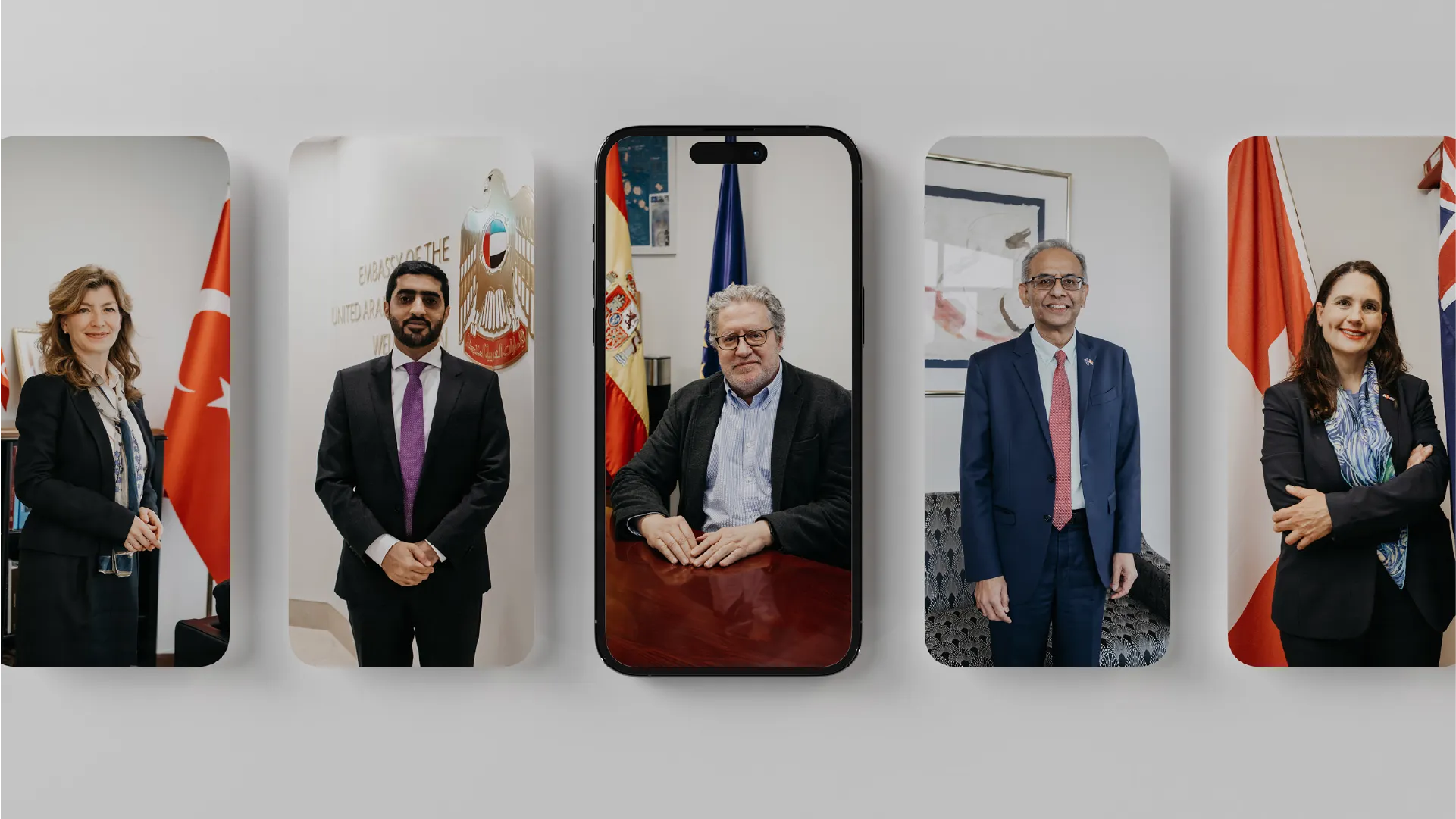
The work of peace does not often get the kind of careful, unhurried attention it deserves. The people who dedicate their professional lives to it tend to be pragmatic rather than idealistic, patient rather than urgent, and honest about the limits of what any single initiative can achieve. They understand complexity. They are sceptical of simple narratives. And they rarely have the opportunity to speak about their work in the kind of depth that actually communicates what it involves.
This documentary series was produced by Best Apisit Uthakhamkong through The Peace Club, the Dunedin charitable trust he founded in 2019. It was made from a specific conviction: that ambassadors and high commissioners working on issues of peace and conflict deserved more than the format of the media interview typically allows them. The standard interview format, short, focused on news hooks, and edited for punchy soundbites, is structurally hostile to the kind of nuanced, reflective thinking that genuinely serious diplomatic work requires. The series was conceived as a structural response to that problem.
Each interview was designed to give its subject time. Not the abbreviated time of a broadcast segment, where the convention is to arrive at a quotable statement within ninety seconds, but the time required to actually think through a question in real time, to revise a first answer, to follow a line of reasoning to its conclusion, to express uncertainty where uncertainty is genuinely present. For people who spend most of their working lives in environments where measured, strategic communication is an institutional expectation, the experience of being given that kind of time is itself unusual.
Uthakhamkong’s approach to the interview format reflects his wider practice as a documentary filmmaker: the camera should be present without being intrusive. The visual approach is clean and direct: good lighting, careful framing, the kind of cinematographic quality that does not draw attention to itself. The camera does not move to create energy or cut frequently to demonstrate pace. These are long conversations, and the filmmaking respects that. The stillness of the visual approach is not a technical limitation. It is a creative decision that communicates the seriousness of the subject.
The conversations in this series address the actual complexity of peace work: the institutional constraints within which diplomatic work operates, the gap between public discourse about conflict and the private knowledge that practitioners carry, the long timelines involved in processes that public attention spans do not accommodate, and the personal toll of work that rarely produces clear victories and frequently produces ambiguity. These are not comfortable conversations. They are not designed to be. The value of the series is precisely that it makes space for discomfort to be expressed rather than managed.
Producing a documentary series with subjects at ambassadorial and high commissioner level requires a specific kind of production environment. The access depends on established trust, on a clear editorial purpose that subjects can feel confident in, and on a logistical professionalism that reassures subjects that their time is being used well. Uthakhamkong’s credibility as both a filmmaker and as the founder of a registered charitable trust dedicated to peace work was central to securing the access the series required.
The series was produced within the programming of The Peace Club, which has committed from its founding to creating spaces for substantive dialogue about peace, conflict, and the conditions that make communities more or less capable of sustaining peaceful coexistence. The documentary series is an extension of that commitment into a permanent, distributable form, putting conversations on record beyond the events that prompted them and making them available to anyone who wants to understand what the work of peace actually involves.
Post-production on the series was handled entirely in-house, with Uthakhamkong overseeing colour grading, audio processing, and the editorial decisions about pacing and structure. The approach to editing reflects the same values as the interview format: patience, respect for the subject’s actual rhythm of speech, and a refusal to accelerate the material for the sake of an implied viewer who is assumed to be disengaged. The films reward viewers who approach them with the same quality of attention that the subjects were given in the room.
The Interviews with Ambassadors and High Commissioners for Peace is a documentary project that demonstrates what can be produced when filmmaking capability is combined with genuine subject expertise and a clear editorial conviction. Uthakhamkong made these films because he believed they needed to exist. The conversations they contain were not being had anywhere else, and The Peace Club provided the right platform for them. The work is the better for that clarity of purpose.
Producer
Best Apisit Uthakhamkong
Disciplines
Documentary,
Interview Production