Case Study
Aurora Australis at the Clocktower University of Otago After Dark
The aurora australis does not wait for a camera operator to arrive. Good aurora photography requires preparation that exists before the event itself. Uthakhamkong was already in position when the southern lights appeared above the University of Otago campus with the kind of clarity that makes footage like this genuinely non-replicable.
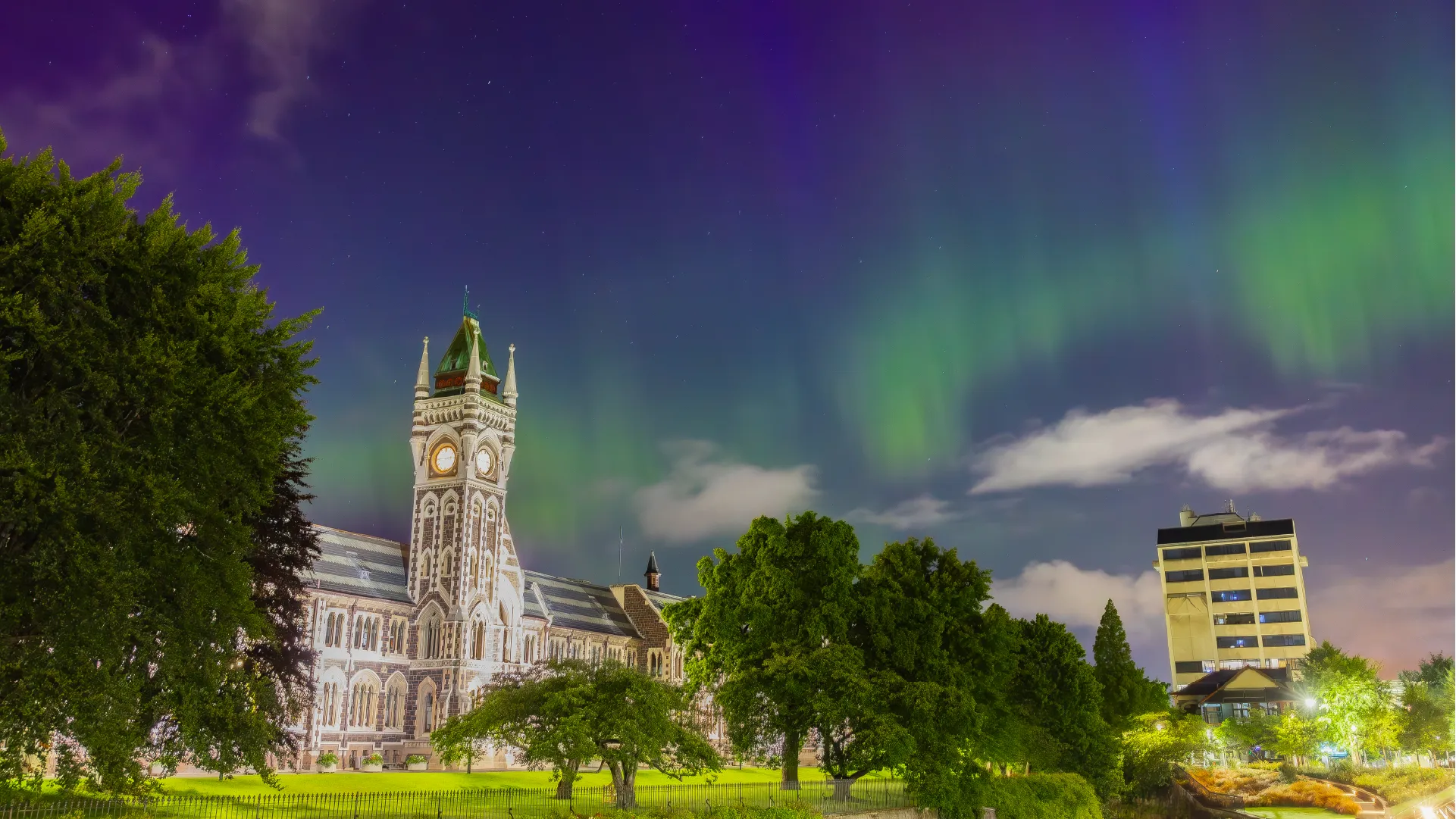
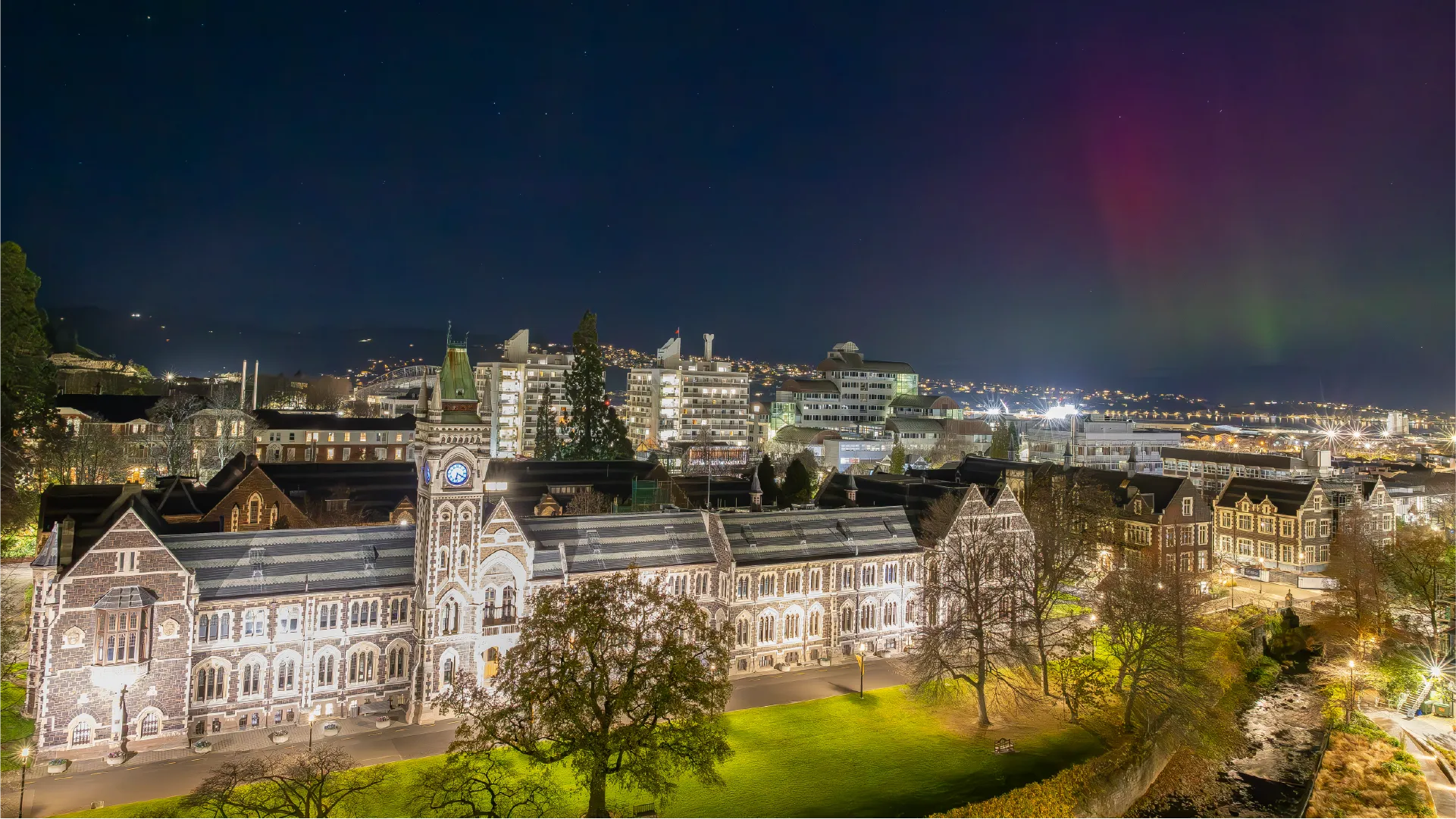
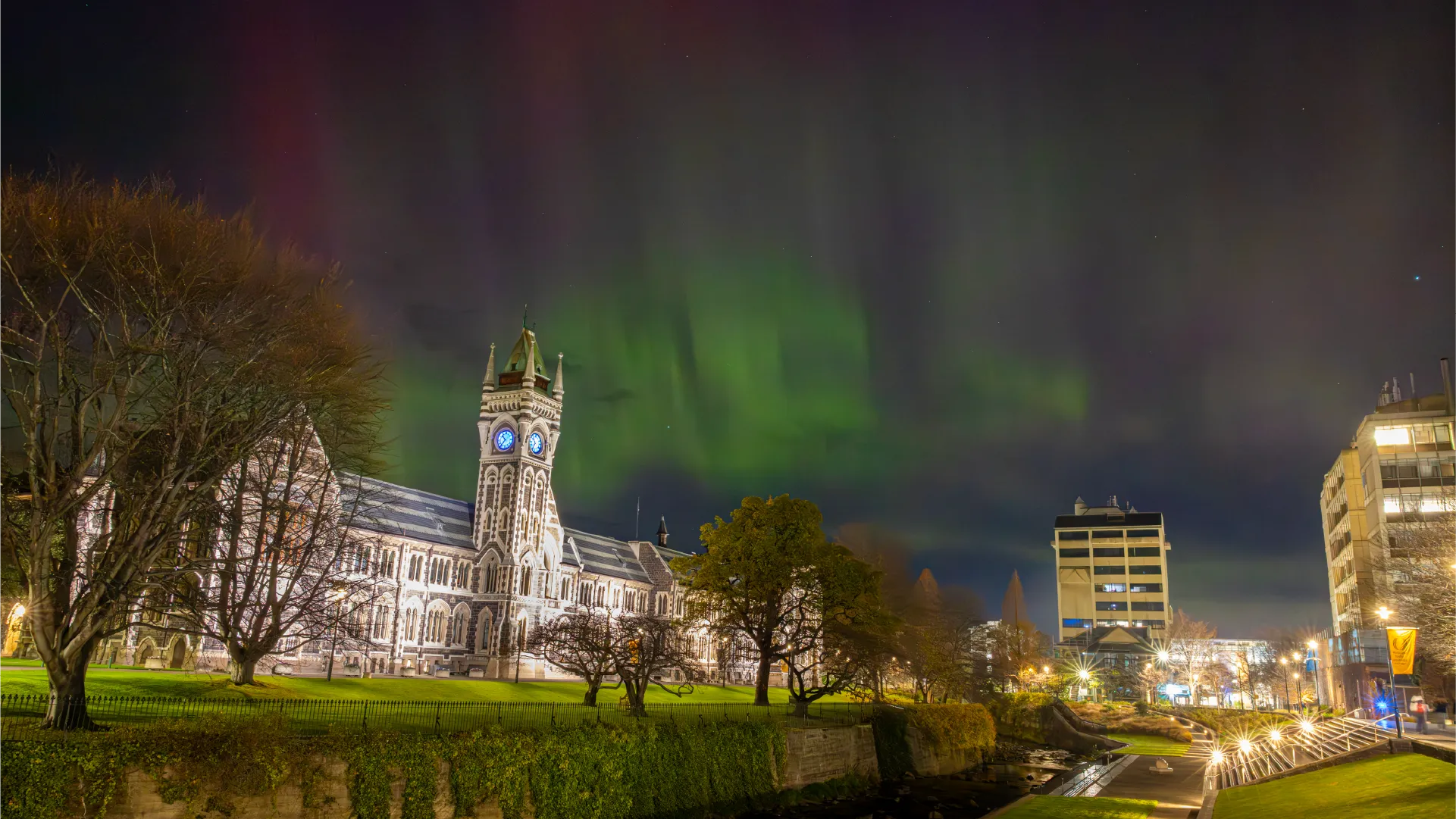
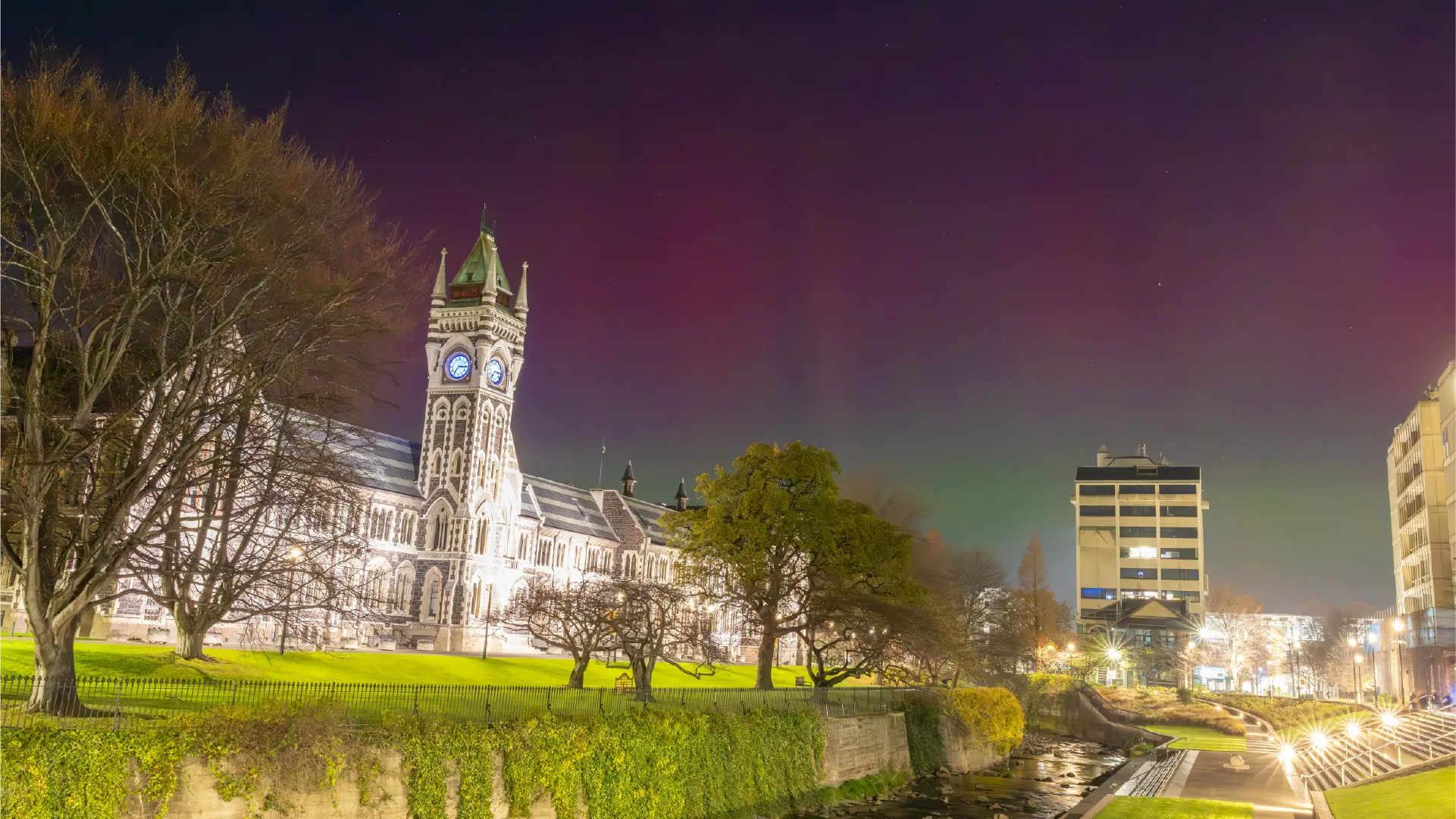
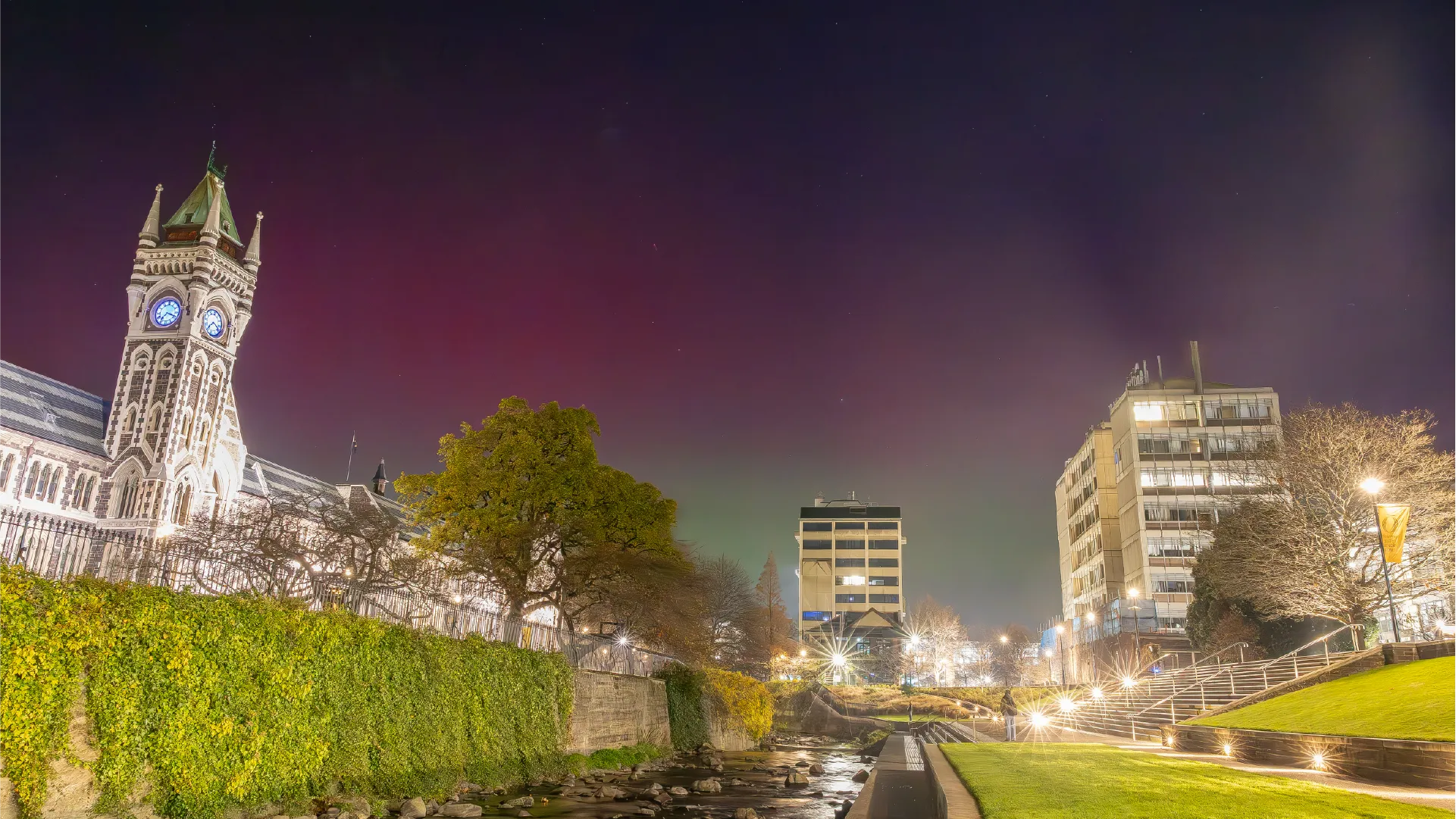
The aurora australis does not operate to a schedule. It appears when atmospheric and solar conditions align in ways that are partially predictable but never certain, and it does not wait for a camera operator to arrive and set up. Capturing it well requires preparation that exists before the event itself: equipment ready, locations known, settings tested and confirmed, and the specific knowledge of where to be in a particular city when the lights appear. Most people who photograph the aurora are opportunists. Good aurora photography requires being ready before the opportunity arrives.
Best Apisit Uthakhamkong was already in position when the aurora australis appeared above Dunedin with unusual clarity on the night this film was made. The University of Otago campus was the location he had chosen: the heritage sandstone buildings that line the Water of Leith, the clock tower, the open lawns of the central campus. The choice was deliberate. The campus provides a foreground that gives the aurora a context and a sense of scale that open countryside cannot. The juxtaposition of human architecture at its most dignified with the indifferent spectacle of the southern lights is the visual argument at the heart of this film.
The University of Otago is the oldest university in New Zealand, established in 1869. Its main campus in Dunedin is built in the Gothic Revival style, with Oamaru stone buildings of considerable architectural authority arranged around a central lawn. At night, the campus has a quality that is almost entirely unlike its daytime character: the buildings hold the last light longer than the surrounding landscape, and the stone picks up colour in ways that are difficult to predict and impossible to manufacture. It is a location that rewards the investment of being there repeatedly, at different times and in different conditions, until its particular character is understood.
The technique used for this film combines time-lapse and long-exposure cinematography. Time-lapse compresses the aurora’s movement into sequences that make its motion visible in a way that real-time viewing rarely achieves. The lights shift and pulse at a pace often too subtle for casual observation, and time-lapse allows that movement to be perceived clearly. Long-exposure photography accumulates light over extended periods, revealing the full range of colour that the naked eye sees only partially: the greens, pinks, purples, and whites that make the southern lights visually distinctive even when viewed through a camera sensor rather than directly.
Night photography at this level requires a precise understanding of exposure relationships. Sensor sensitivity, aperture, and shutter duration interact differently at night than in standard lighting conditions, and the range of adjustments available to manage this interaction is narrower. The aurora adds a further variable: the intensity and colour of the lights change rapidly, and an exposure setting that works for one sequence may be entirely wrong for the next. Successful capture requires constant monitoring and adjustment throughout the shooting window.
The filming took place during the southern hemisphere’s aurora season, when solar activity and the tilt of the Earth combine to make the southern lights more frequently visible at mid-latitudes. Dunedin’s position at approximately 46 degrees south latitude places it at the edge of the regular aurora observation zone, not as far south as the most reliable viewing sites but close enough that exceptional displays reach the city with occasional clarity. This rarity is part of the film’s value: the aurora is not a common sight from Dunedin’s streets, and footage of this quality from this location does not exist in abundance.
The post-production process for aurora time-lapse involves a sequence of technical decisions about colour treatment, frame rate, and the relationship between the speed of the aurora’s movement and the pace at which the film presents it. Uthakhamkong’s approach was to resist the temptation to accelerate the material beyond what the event itself warranted. The lights moved at a particular pace on this night, and the film respects that pace rather than manufacturing a more dramatic version of it.
The University of Otago has a legitimate interest in this footage as a visual asset. The combination of the campus’s architectural character and the aurora’s visual spectacle produces imagery that is both genuinely beautiful and essentially non-replicable by standard photographic or video means. It exists because someone was prepared, positioned, and skilled enough to capture it when the conditions aligned. That combination of preparation and craft is not incidental to the value of the work. It is the work.
This film is a reminder of what is available to a creative producer who knows a place deeply enough to know where to be when something remarkable happens. Uthakhamkong has worked in Dunedin for over a decade. He knows the University of Otago campus as a working environment and as a filming location. He knows the seasonal patterns of the aurora in the southern sky. He was there. The film exists because of that accumulated knowledge, and it will continue to function as a lasting visual record of a night when the sky above one of New Zealand’s most distinctive institutions did something genuinely extraordinary.
Producer
Best Apisit Uthakhamkong
Disciplines
Night Sky Photography
Timelapse
Video Production