
Otago Polytechnic
This case study explores the design of a scalable social media system that enabled Otago Polytechnic's communications team to create consistent, high-quality content without relying on a designer.
Large institutions consistently solve the social media communications problem poorly. Otago Polytechnic needed infrastructure, not individual content pieces: a system built for high-frequency production across multiple audience groups, designed to hold its quality long after the engagement had ended.
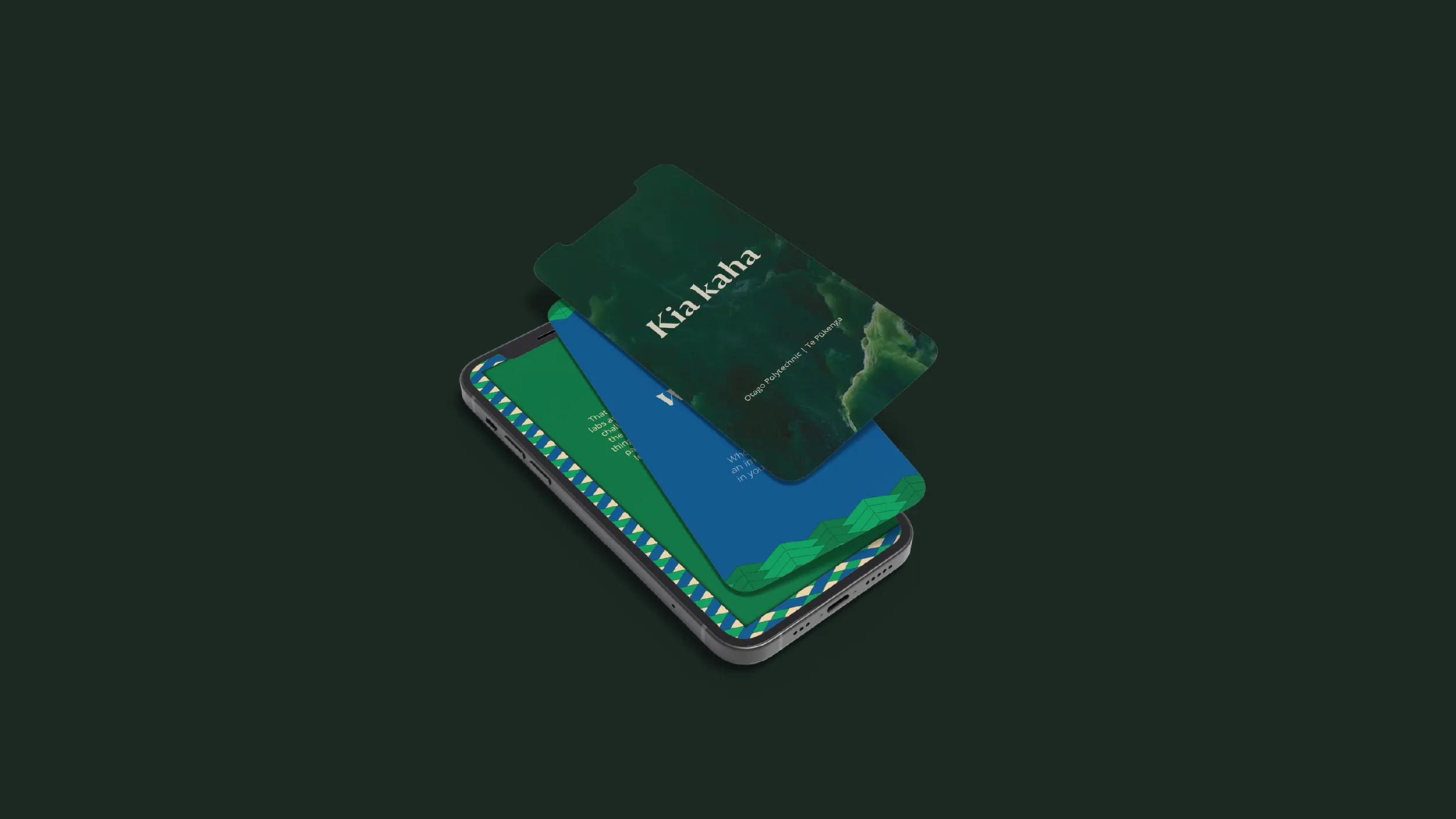
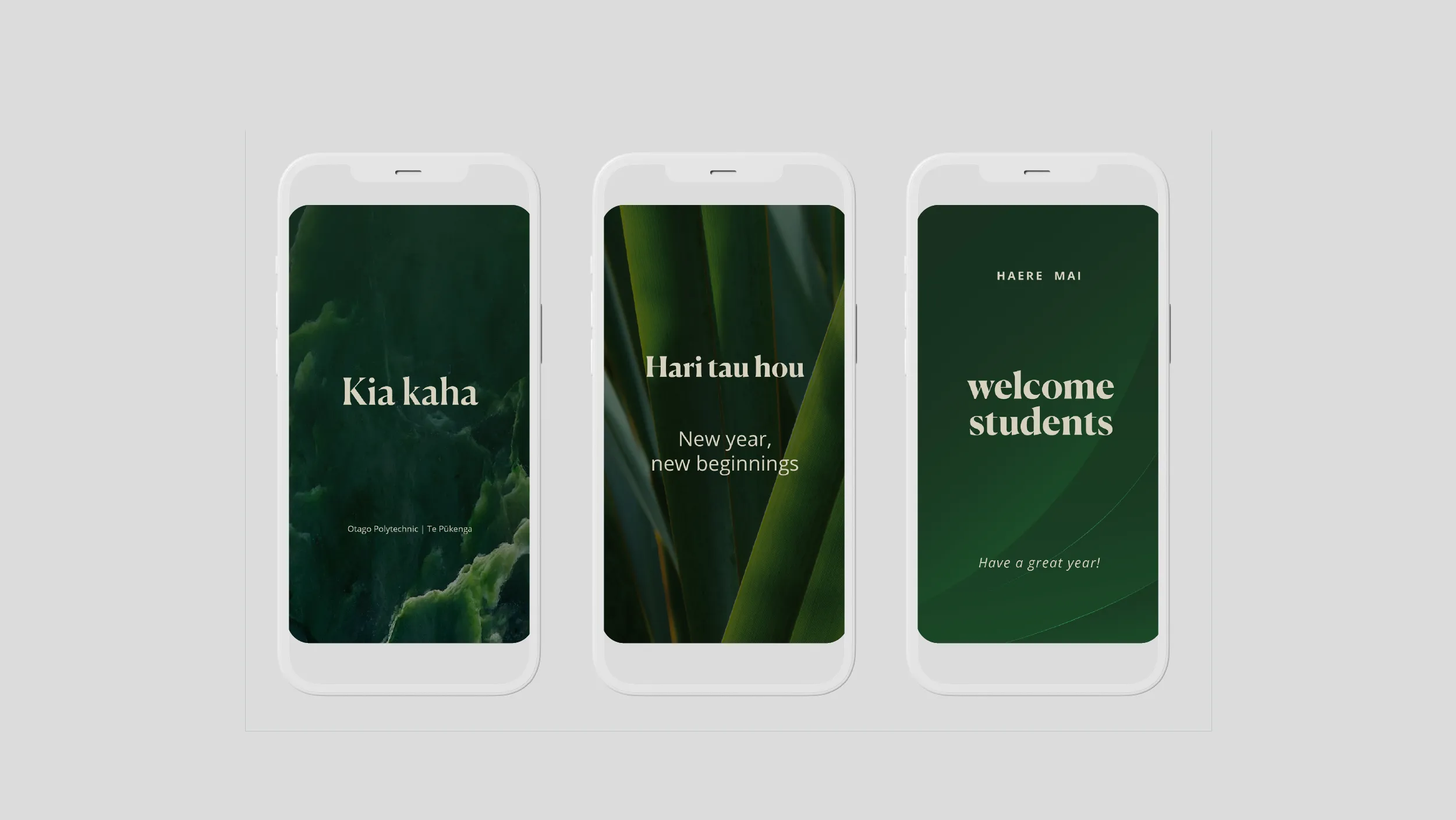

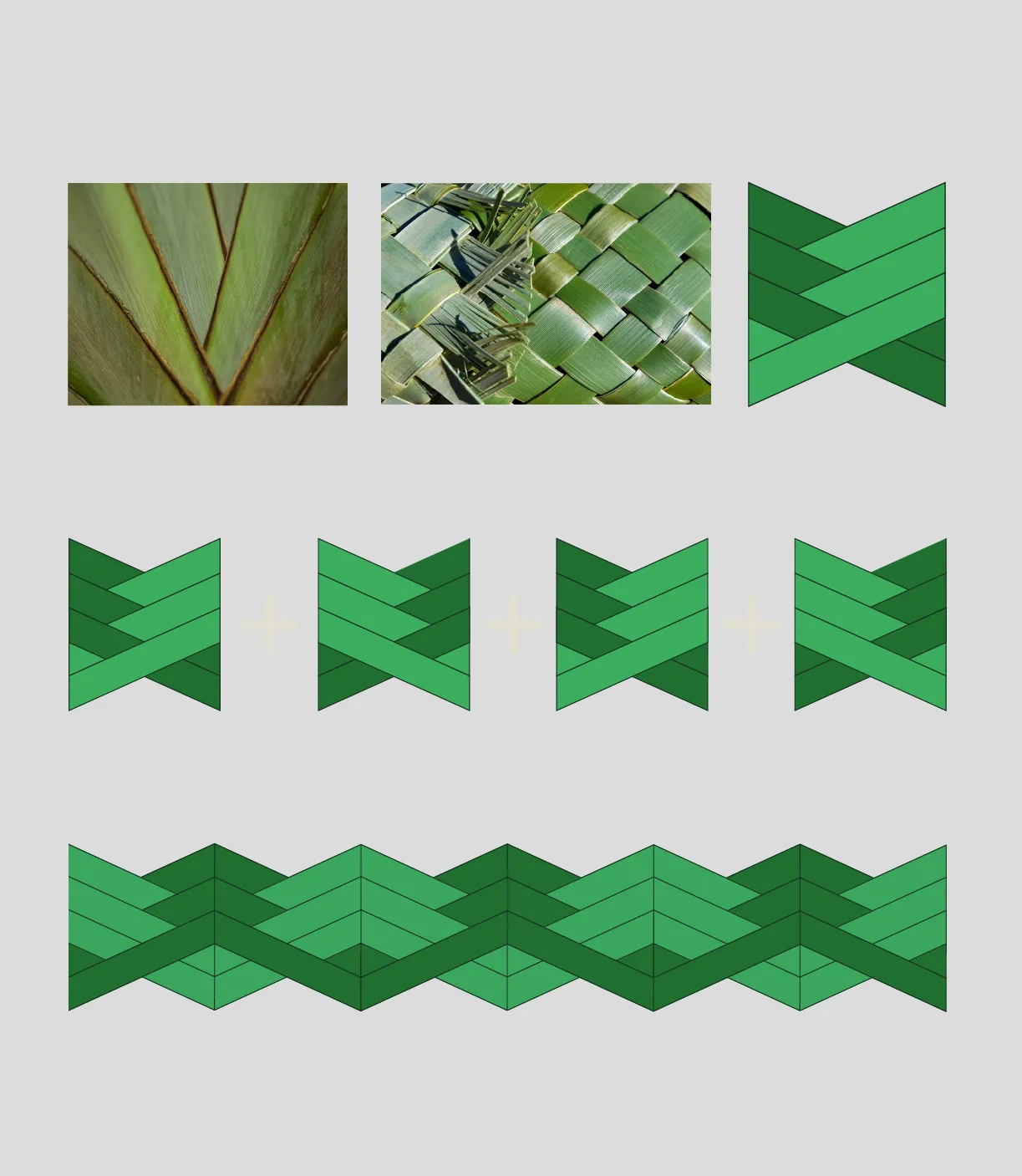
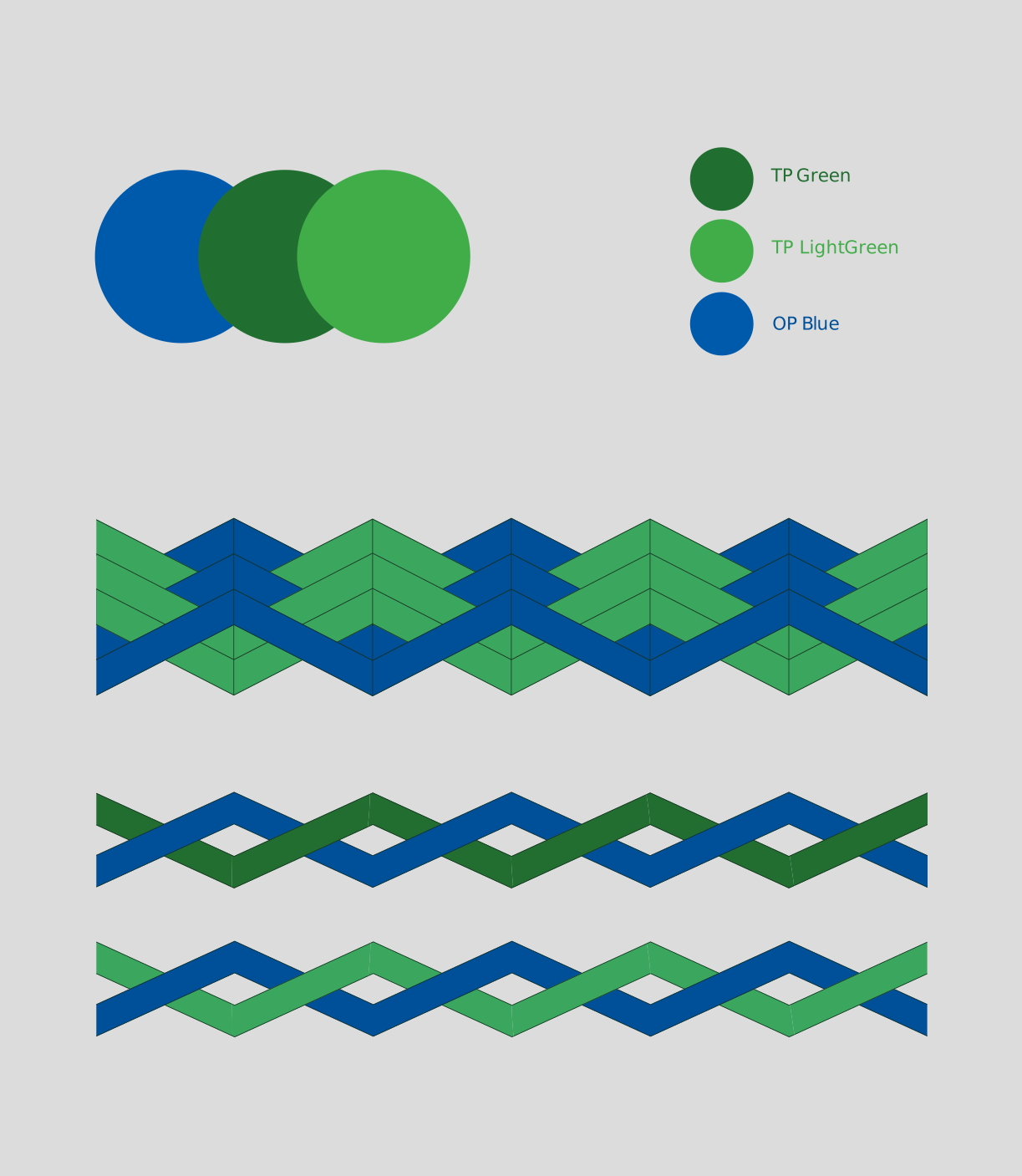

A template system only succeeds if the people who are supposed to use it actually use it. That means it has to be intuitive enough to work without instruction in real production conditions, flexible enough that team members feel like they are making something rather than filling in a form, and constrained enough that every piece that comes out of it looks like it belongs to the same organisation. Getting all three right simultaneously is the design challenge.
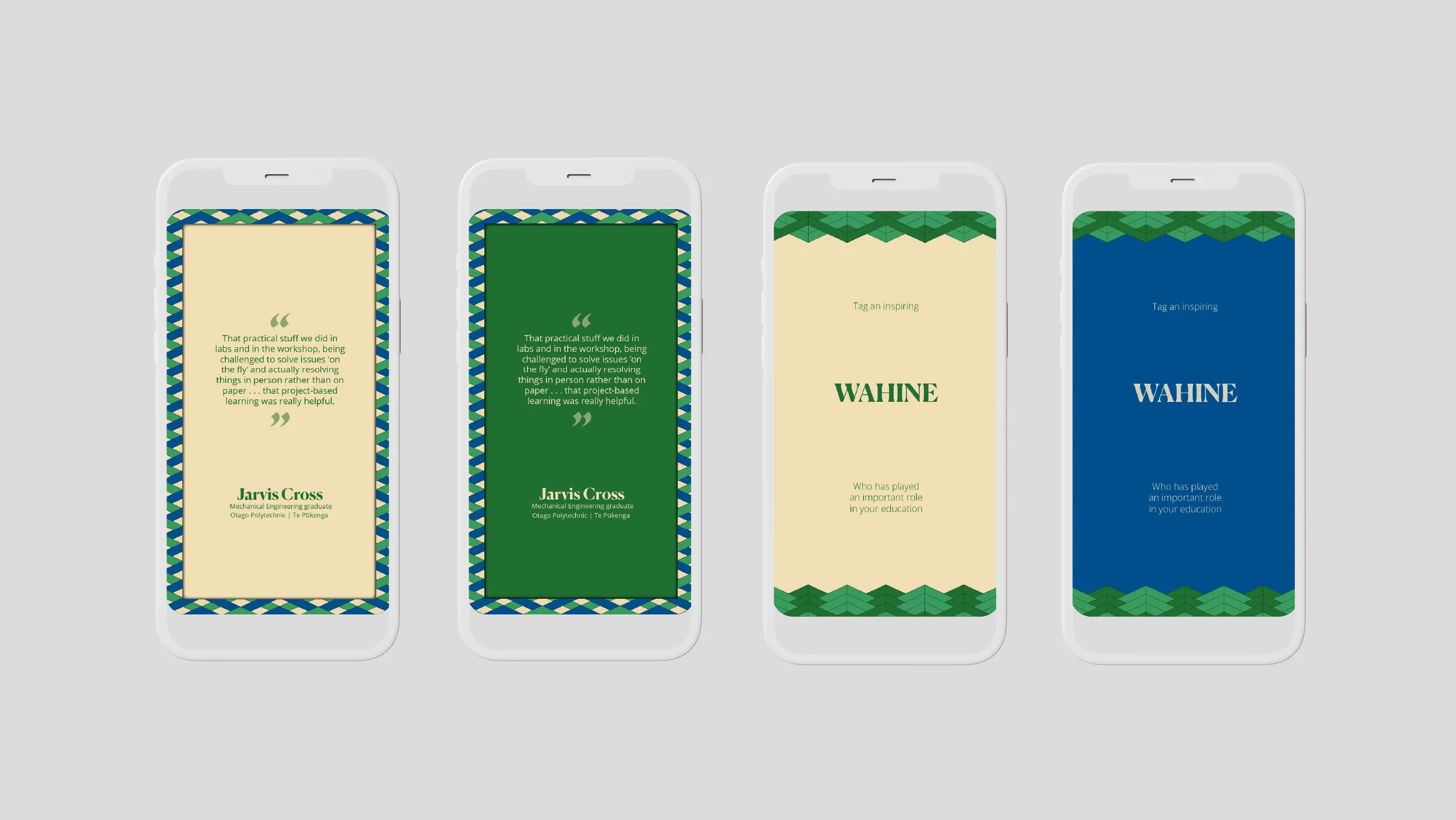
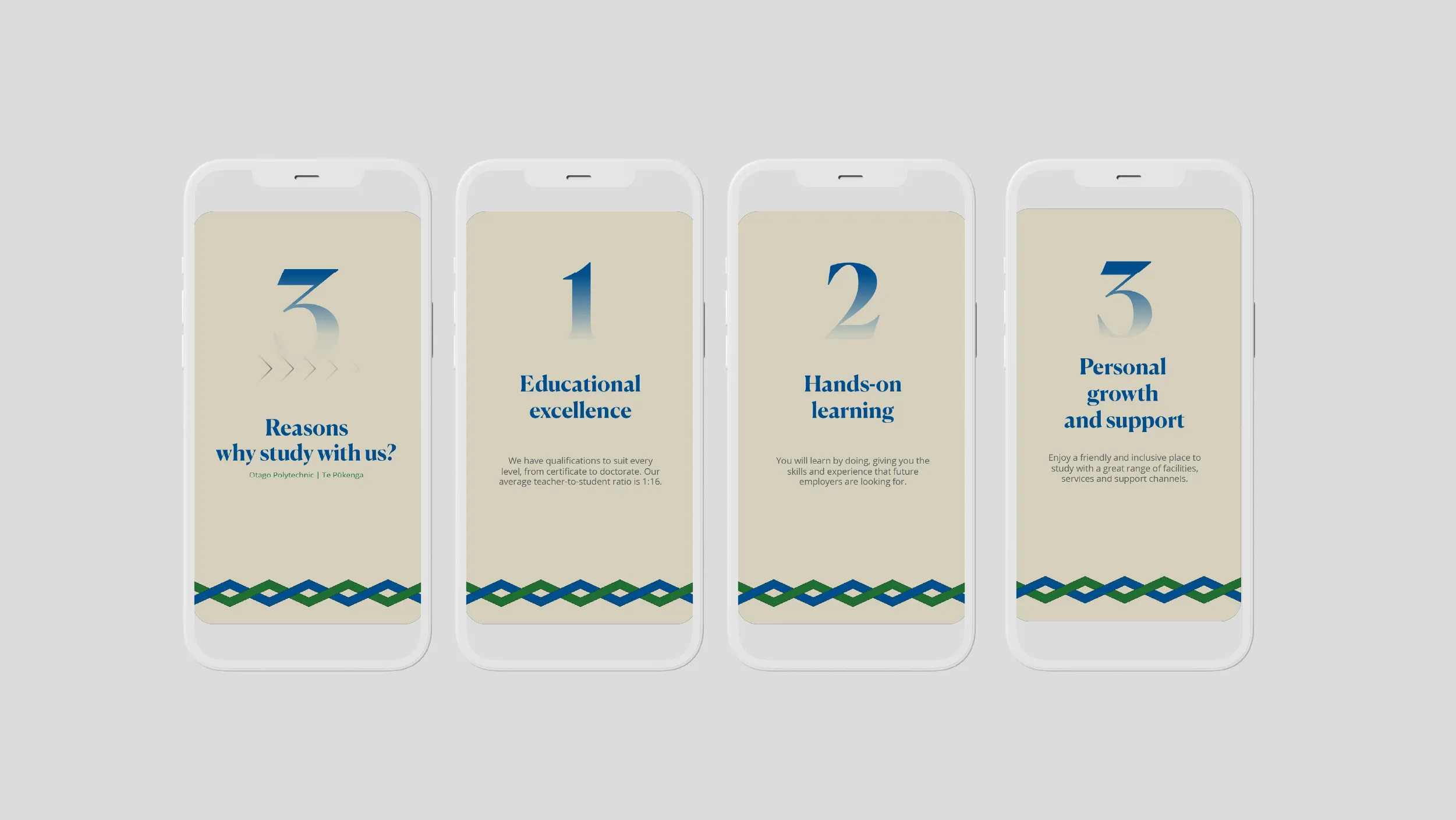
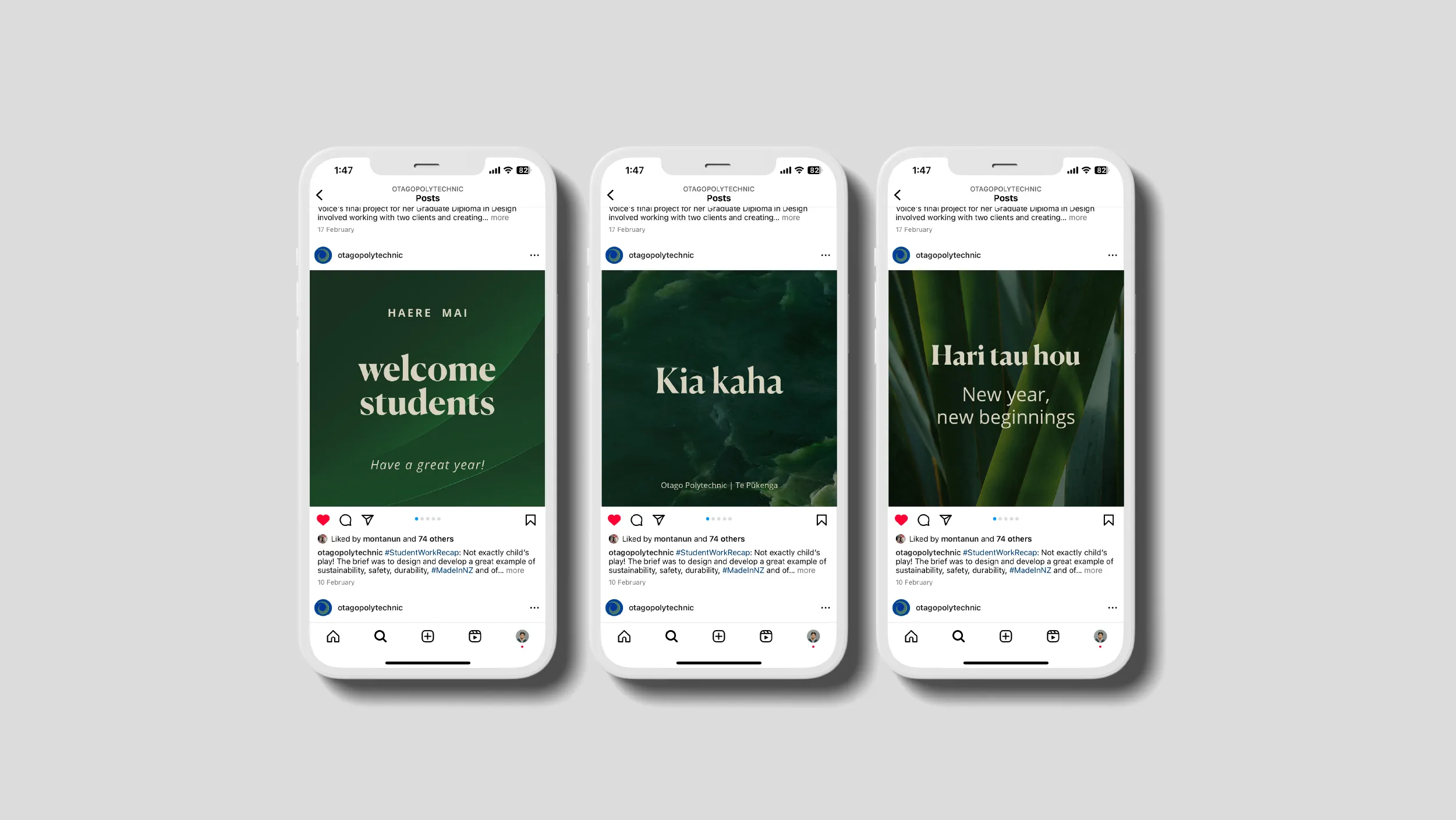
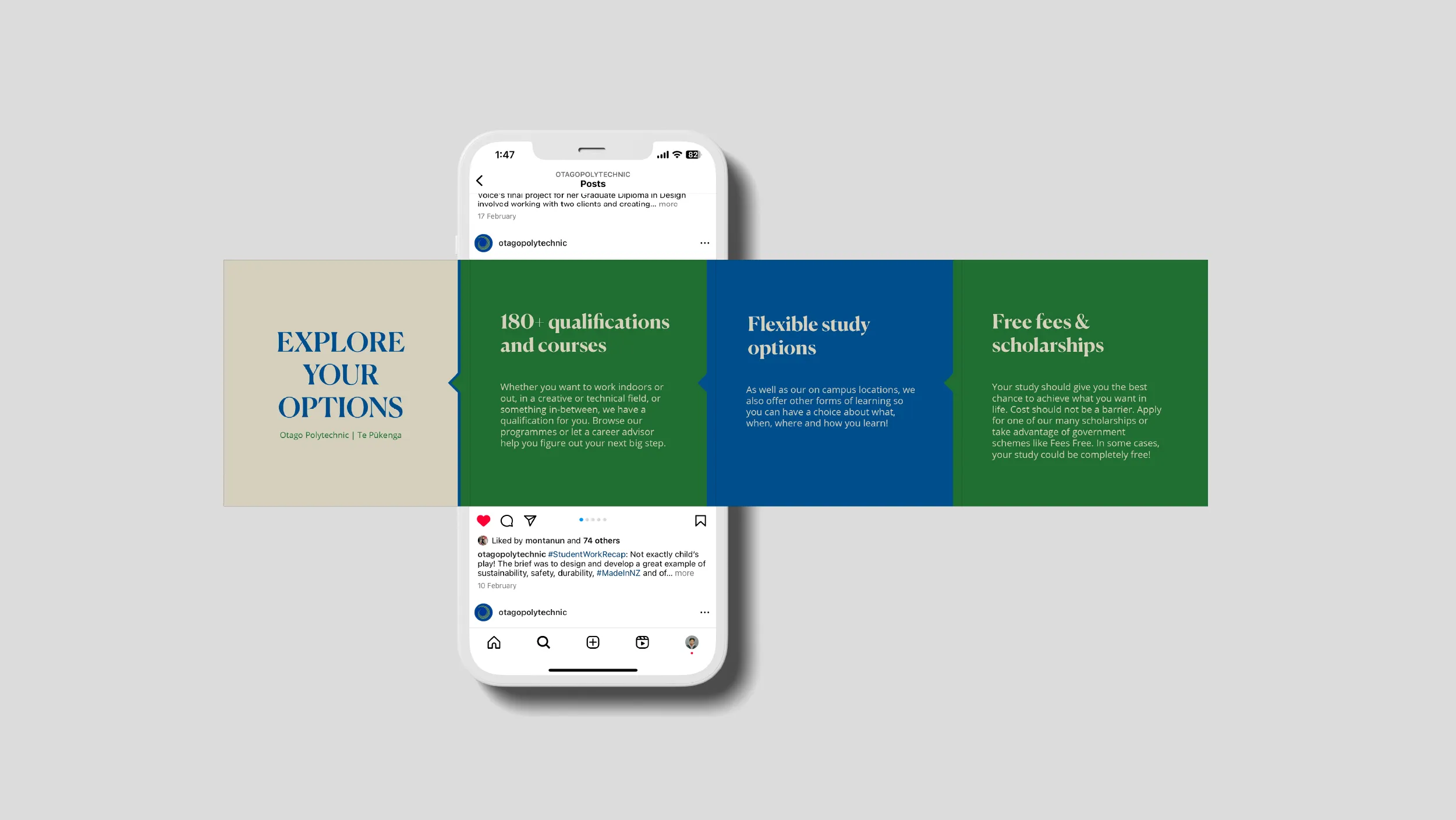
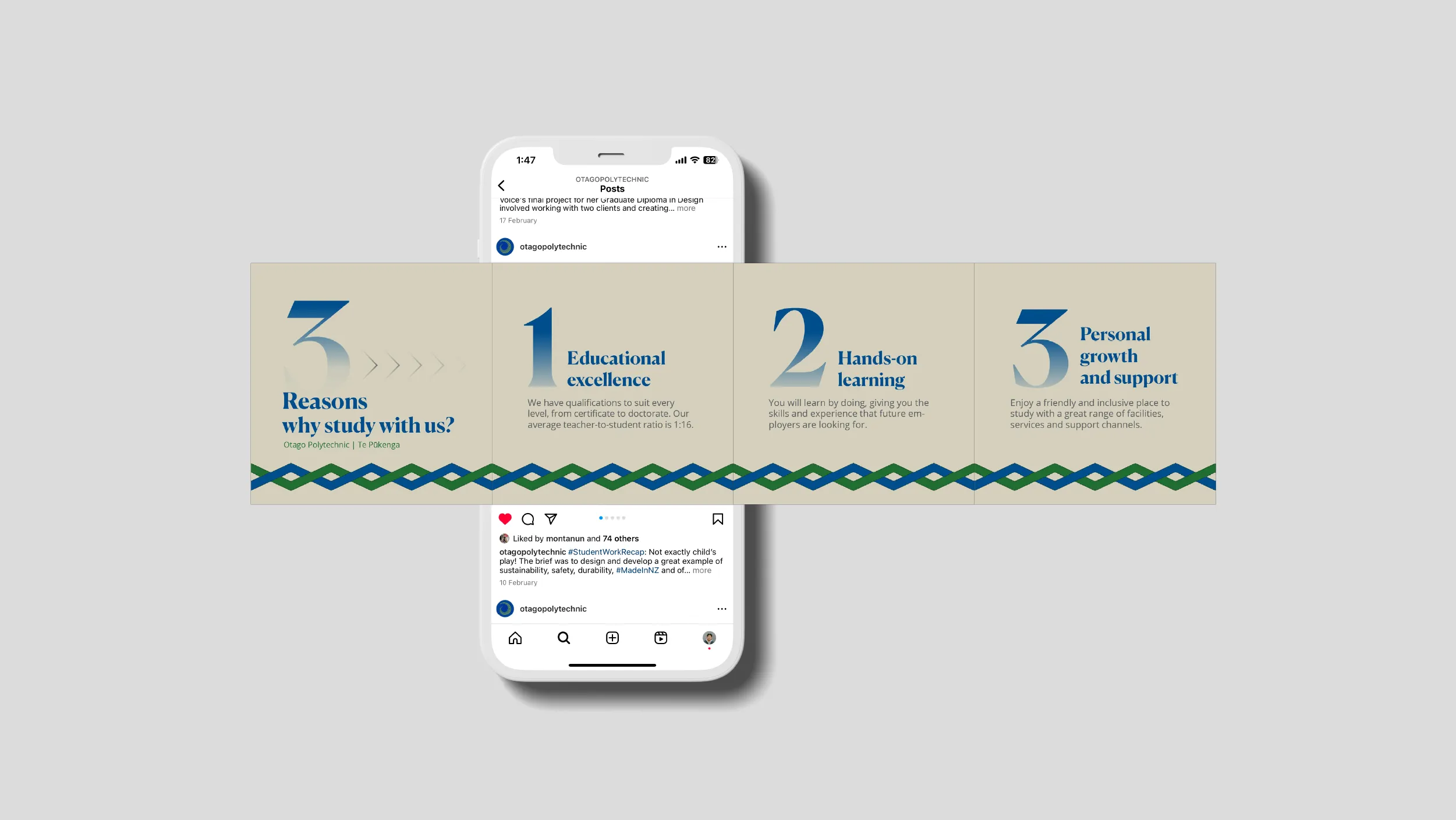
Otago Polytechnic serves a student community that is diverse in age, background, language, prior educational experience, and vocational aspiration. Every piece of social communications has to work simultaneously for school leavers seeing the institution for the first time, mature adults returning to study, and international students reading the content in a second language. The template system was designed with that audience diversity in mind, not as an afterthought.
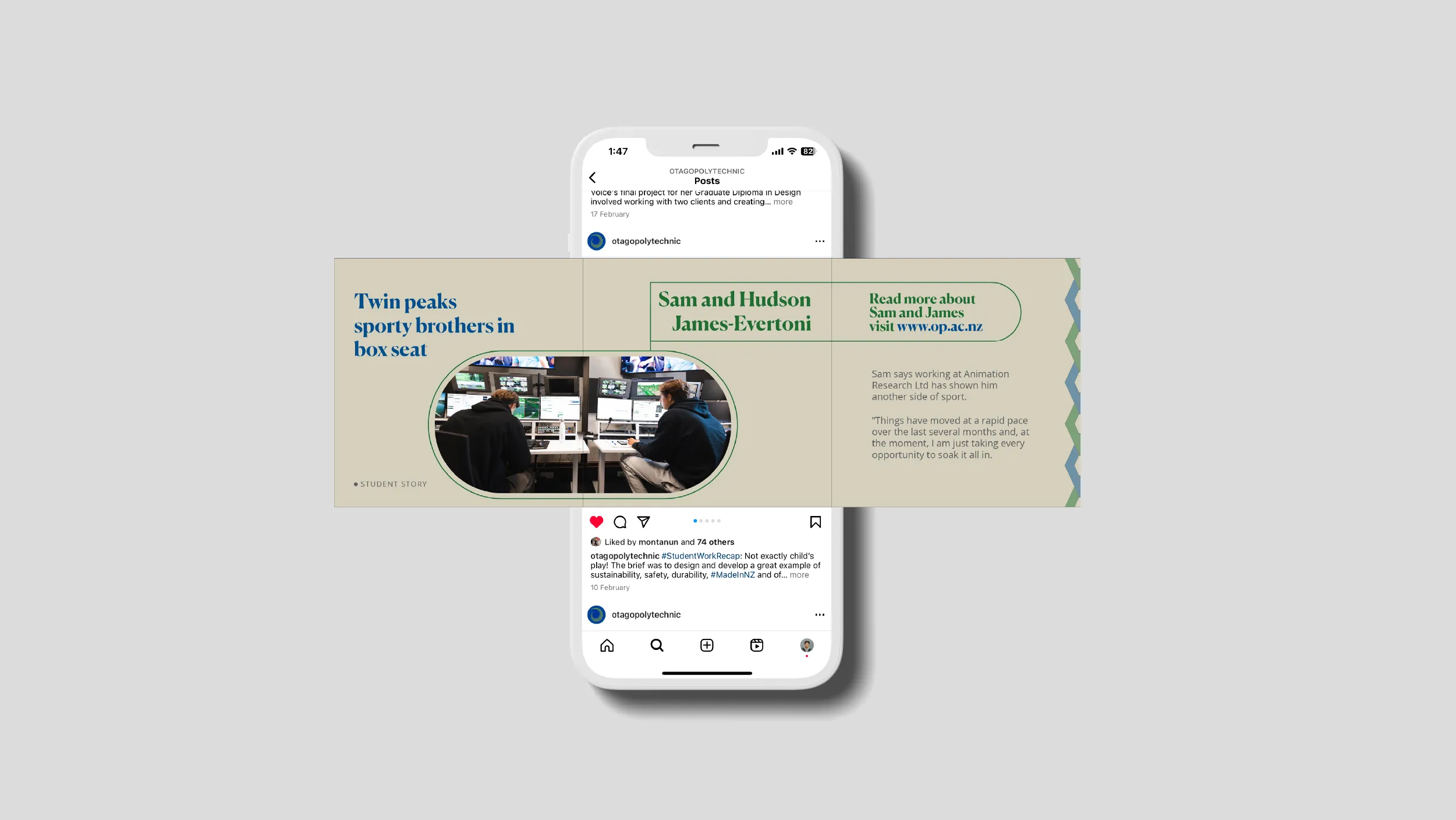
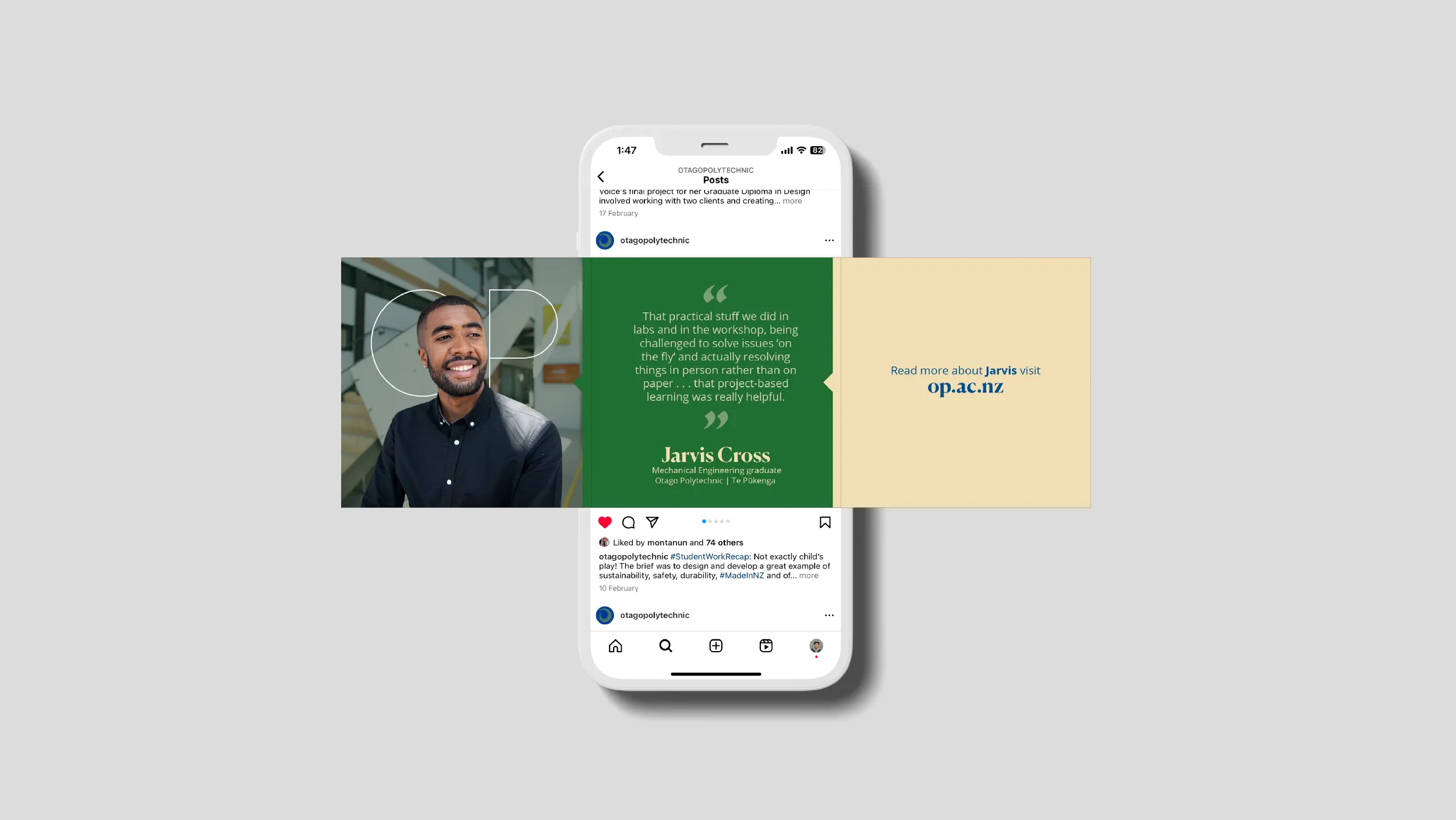
The template library covers the full range of content types the team produces regularly: event promotion, student spotlights, course announcements, news and updates, motivational brand content. Each template type has its own layout logic appropriate to the content it holds. Together they form a system rather than a collection, and that coherence is what makes the whole greater than the sum of its parts.
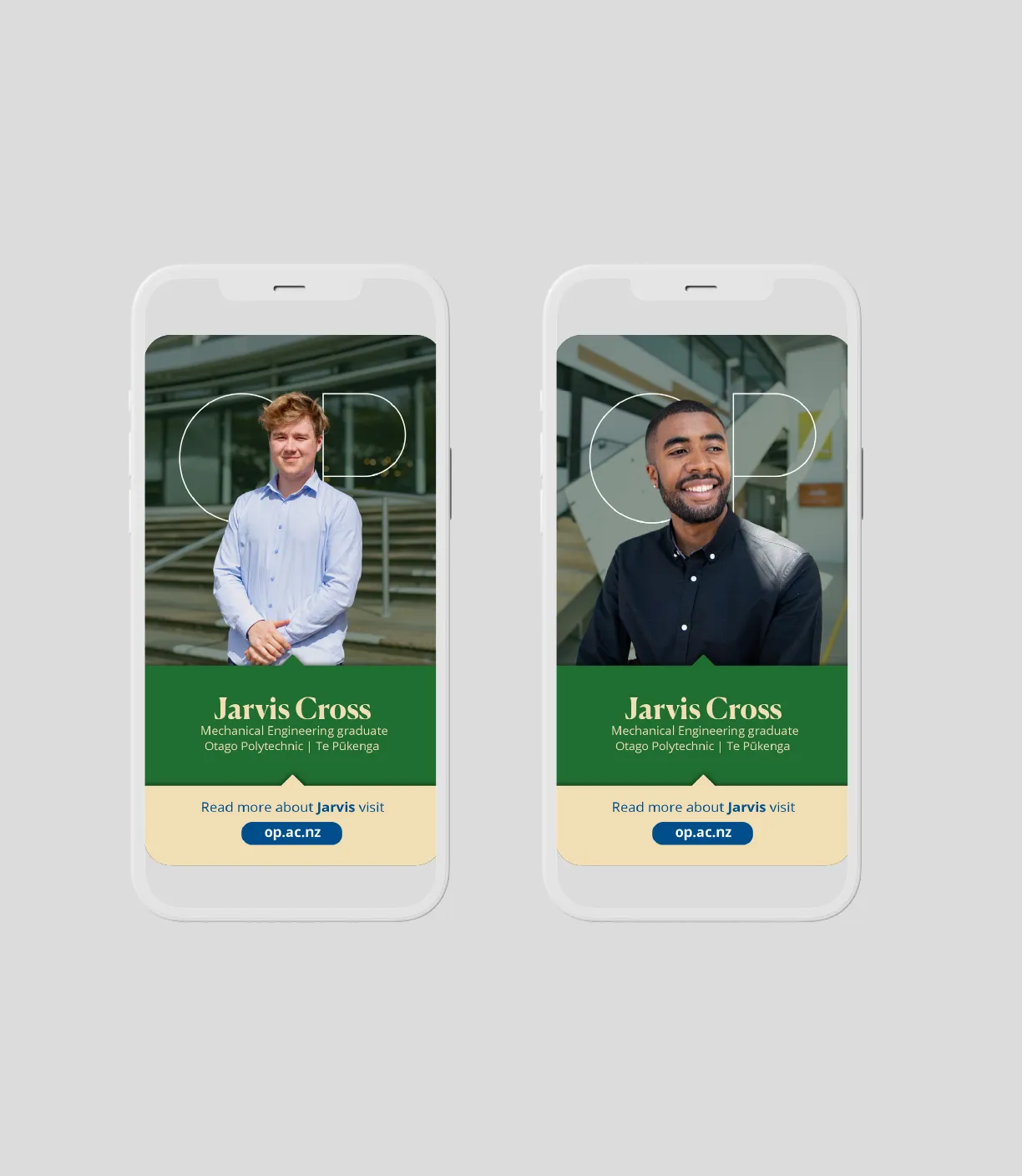
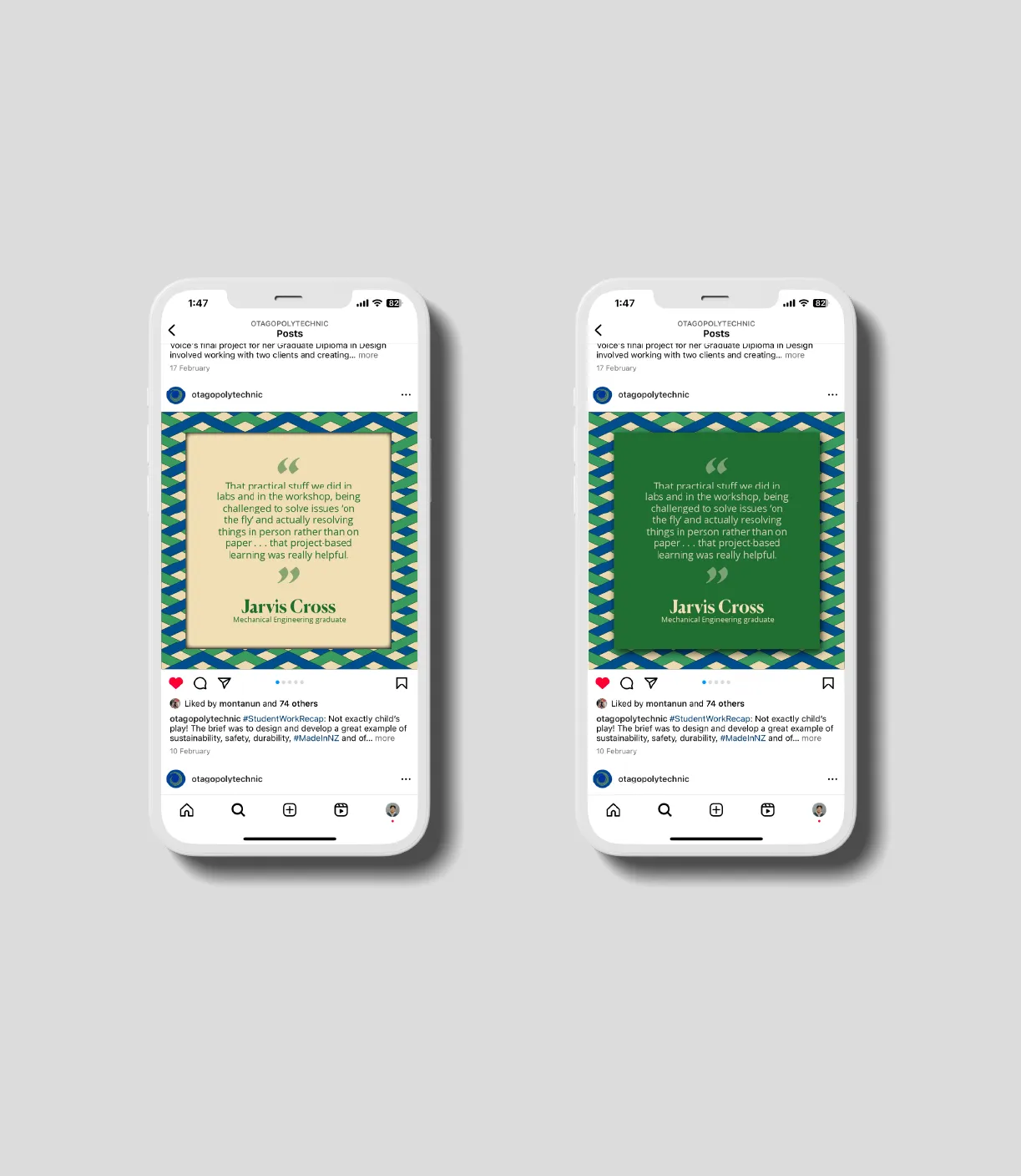
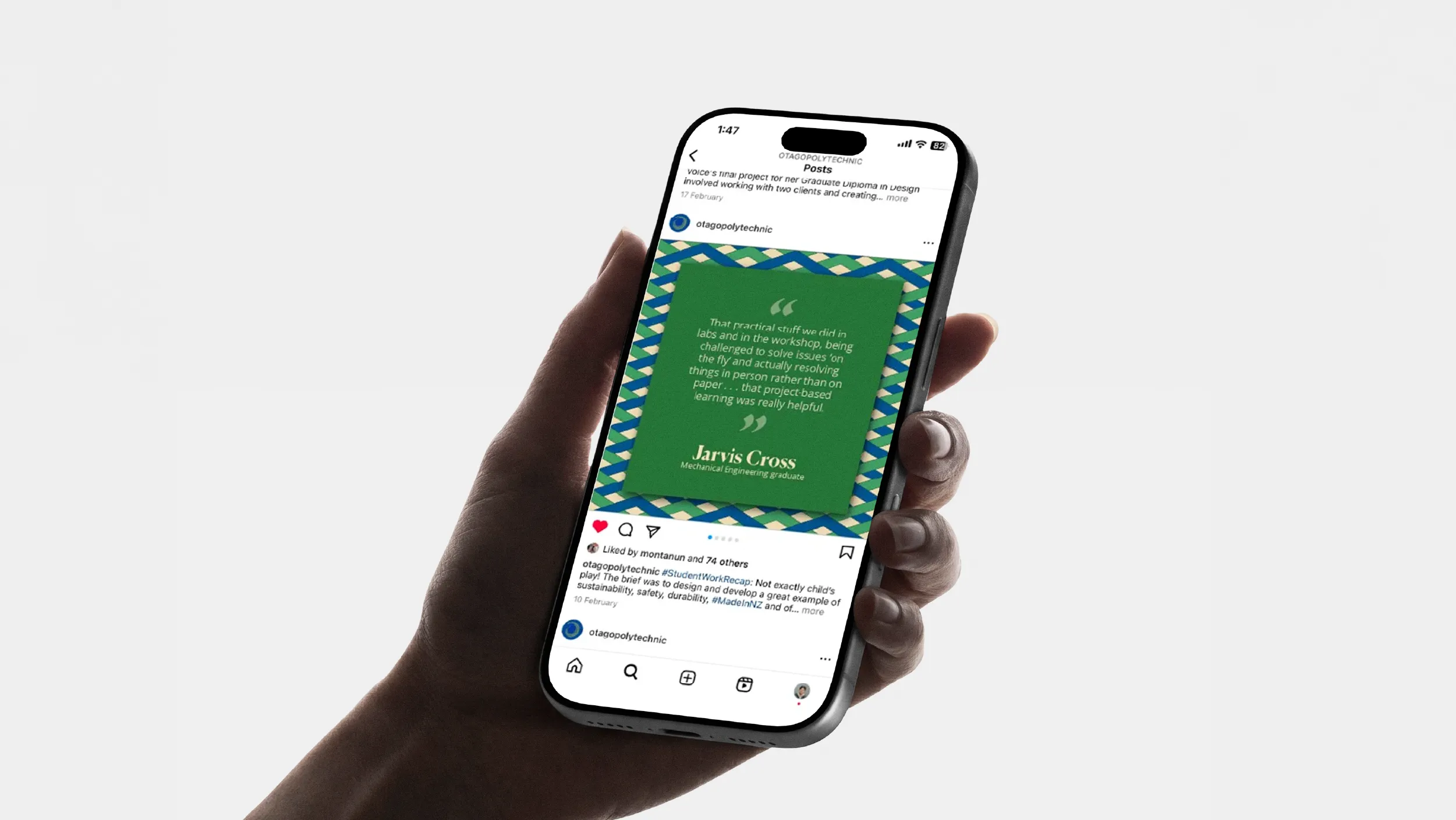
The social media communications challenge at scale is a design problem that most large institutions solve poorly. The pressures are real: high-frequency content production across multiple platforms and audience groups, a communications team that includes people with varying levels of design literacy, brand guidelines that were written for print and do not translate directly to social formats, and a pace of production that makes custom design for every post impractical. The typical result is content that is inconsistent in quality, variable in brand compliance, and visually incoherent when viewed across a channel over time.
Otago Polytechnic is one of New Zealand’s largest tertiary institutions, now operating as part of Te Pukenga, the New Zealand Institute of Skills and Technology. Its communications function serves a wide range of audiences across multiple channels simultaneously: prospective students, current students, industry partners, academic staff, the local community, and the national media. The volume of content required to maintain a meaningful presence across these channels is substantial.
Best Apisit Uthakhamkong was engaged to design a comprehensive social media template system that would give the communications team the tools to produce professional, on-brand content independently. The brief was essentially an infrastructure problem: not to produce content, but to design the system within which others could produce content to a reliably high standard without requiring a designer to be present for every piece.
The approach was to begin with a thorough audit of the institution’s existing social media content, brand guidelines, and communications workflows. Understanding where quality was breaking down, which content types were being produced most frequently, and where the communications team felt least confident in their design decisions provided the foundation for a template system that addressed the actual problem rather than a theoretical version of it.
The template system covers the full range of content types that the Otago Polytechnic communications team produces on a regular basis: event promotion and announcements, student achievement highlights and profiles, programme information and enrolment calls to action, research and academic news, community engagement posts, and institutional announcements. Each content type has its own template family, designed for the specific visual and informational requirements of that type.
Every template was developed within the institution’s brand guidelines, with particular attention to the decisions that most commonly compromise brand consistency in large team environments: typography hierarchy, image treatment and composition, colour application, and the placement and sizing of the institutional logo. These decisions are built into the template structure, so the person creating the content makes choices about the message, what to say, which photograph to use, and what the call to action is, rather than choices about the design.
The layout system uses a modular grid that provides enough structure for consistency while allowing enough flexibility for the range of content types the team produces. Image placement zones are defined for each template, ensuring that photographs crop predictably and that text remains legible across the range of content likely to be placed within them. Text hierarchy is built into the template through style and size, so the person creating the post does not need to make typographic decisions.
Colour variations were built into each template family, allowing the communications team to differentiate between content types and audience groups while maintaining overall brand coherence. The variation is systematic rather than arbitrary: each colour variant corresponds to a specific use case, so the choice of colour is a communication decision rather than an aesthetic one.
The delivery included not only the template files but documentation explaining the logic of the system and training for the communications team covering how to use the templates, what variations are available, and what the system is and is not designed to accommodate. For a template system to work at the scale Otago Polytechnic requires, the people using it need to understand its structure well enough to work within it confidently and to recognise the point at which a post requires custom design rather than template application.
This kind of infrastructure work does not produce the immediate visual impact of a brand identity or a website redesign. Its value is cumulative and operational: a communications team that can produce professional content at pace without compromising quality, a social media presence that is visually coherent over time, and a design resource that continues to deliver returns long after the engagement has ended. For a large institution with sustained high-frequency communications requirements, that operational value is substantial. Uthakhamkong designed a system built to last.
Client
Otago Polytechnic
Sector
Education
Disciplines
Social Media Template Design
Brand Systems
Canva Template Production
Graphic Design