Case Study
Interviews with Ambassadors and High Commissioners for Peace
Producer Best Apisit Uthakhamkong travelled across New Zealand to interview ambassadors, high commissioners, ministers, and community leaders about peace, diversity, and inclusion. From the New Zealand Parliament to Wellington embassies and conversations about Parihaka, this long-form series gives thoughtful diplomatic voices the time and space to speak honestly about what peace actually costs.
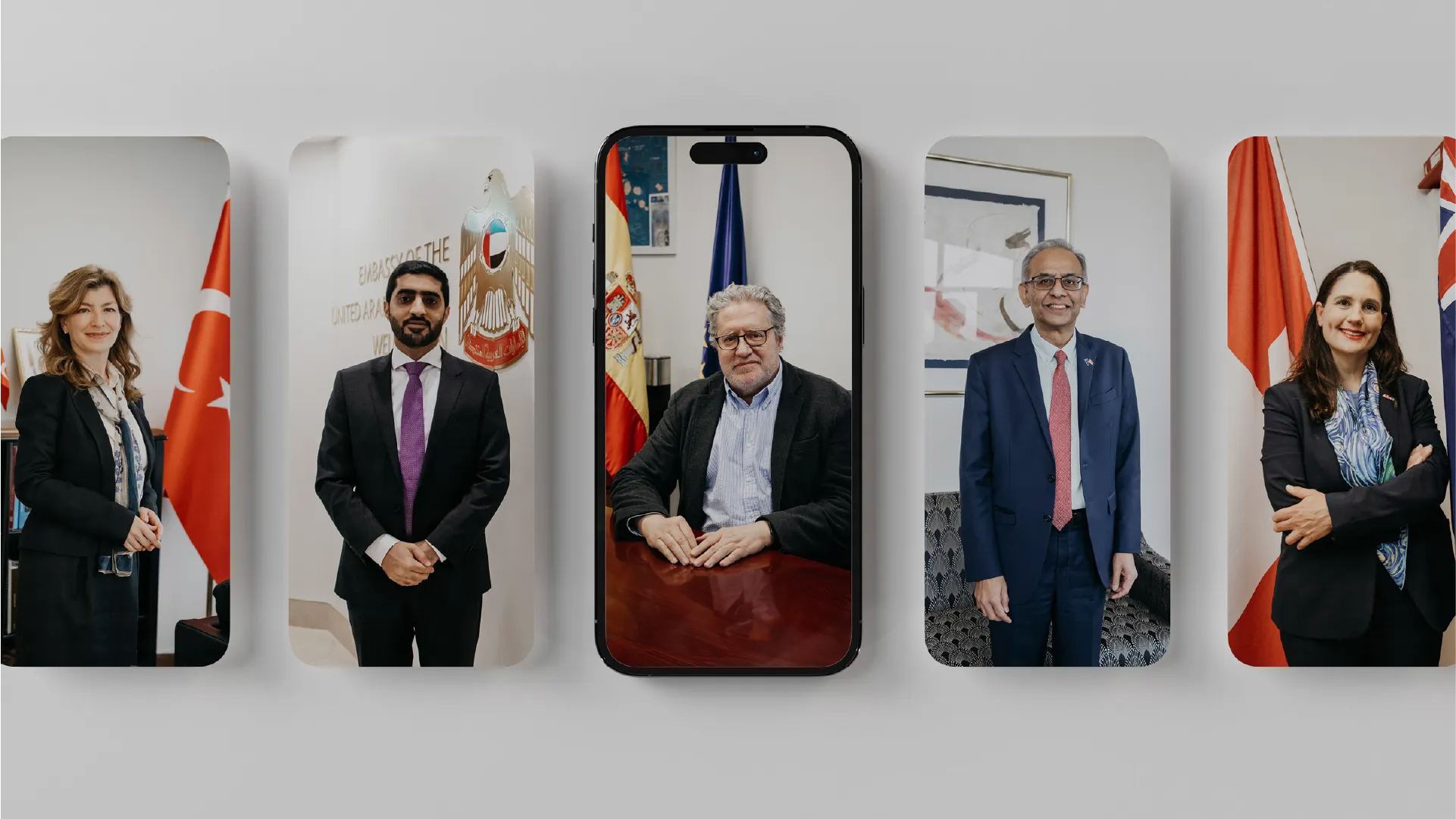
Diplomatic work is almost never visible. The conversations that matter happen in rooms that cameras do not enter. The progress that is made on difficult issues is rarely announced publicly until it is already done. And the people who dedicate their careers to the slow, difficult, unglamorous work of building understanding between nations and communities rarely get the opportunity to speak about that work outside of formal contexts where every word is measured for protocol.
This documentary series was made to create a different kind of space.
Producer Best Apisit Uthakhamkong, founder of The Peace Club and creative director of POV Creative Agency, spent an extended period travelling across New Zealand to meet with ambassadors, high commissioners, ministers, and community leaders. The project emerged from his work with The Peace Club, a Dunedin-based charitable trust dedicated to promoting peace, mindfulness, and cross-cultural understanding. The film is both a creative production and a direct expression of the values that organisation was built on.
The series opens with an interview at the New Zealand Parliament in Wellington, where Best met with Hon Phil Twyford, at the time serving as Minister for Disarmament and Arms Control, Minister of State for Trade and Export Growth, and Associate Minister for the Environment and Immigration. Their conversation covered New Zealand’s approach to arms control, the relationship between peace and climate action, and the particular role a small independent nation can play in international disarmament efforts. It was a wide-ranging conversation that set the tone for everything that followed.
At the Embassy of Spain in Wellington, Best met H.E. Miguel Bauza More, who had arrived in New Zealand just six months earlier. Despite the short time in-country, the ambassador engaged with questions about peace and diplomacy with a depth and candour that surprised the production team. His perspective on arriving in New Zealand, coming from a European country with its own complex recent history, brought a dimension to the conversation about peace that was different from what other interviews in the series provided.
The Singapore High Commission was one of the most visually impressive locations in the series, and H.E. Sudesh Maniar, the High Commissioner of Singapore, was an important voice to include. Singapore’s history as a nation built on the active management of diversity and inclusion gave the interview a specific authority on those questions, and Maniar spoke with clarity about the practical policy dimensions of what many discussions about diversity leave at the level of aspiration.
At the Embassy of Switzerland in Wellington, Best met Deputy Head of Mission Mrs Sandra Chawla-Gantenbein. Switzerland’s long-standing commitment to neutrality, peace facilitation, and alignment with United Nations principles made it an important voice for the project. The conversation covered Switzerland’s specific role in international peace processes and the alignment between Swiss foreign policy and the UN’s broader goals and values.
H.E. Mrs Omur Unsay, Ambassador of the Republic of Turkey, spoke with warmth and directness about the policy dimensions of peace, diversity, and inclusion. Turkey’s geographic and cultural position at the intersection of Europe and Asia gives it a distinctive perspective on cross-cultural relationship and conflict, and the ambassador brought that perspective to the interview in ways that were both informative and unexpected.
The meeting with H.E. Rashed Alqemzi, Ambassador of the United Arab Emirates, began with the kind of anxiety that visiting a major embassy for the first time produces. The ambassador’s warm welcome and generous hospitality immediately changed the atmosphere, and the conversation that followed about the UAE’s approach to peace and its role in regional diplomacy was one of the frankest in the series. The UAE’s position in the Gulf region gives it a particular stake in questions of peace and stability, and Alqemzi spoke about that stake with genuine engagement.
The conversation about Parihaka with Tonga Karena and Pund Wano-Bryant brought the documentary into direct contact with New Zealand’s own history of conflict and peaceful resistance. Parihaka, the western Taranaki settlement whose peaceful resistance to the colonial confiscation of Maori land was met with an invasion by 1,600 troops in 1881, is a foundational story in New Zealand’s understanding of peace and justice. Including this conversation grounded the international diplomatic perspectives in a local historical reality that gave the series depth and specificity.
H.E. Jesus S. Domingo, Philippine Ambassador to New Zealand, Cook Islands, Fiji, Niue, Samoa and Tonga, brought the energy and intellectual engagement of someone who has written and thought deeply about the questions the documentary was exploring. The conversation about peace and the most effective routes toward it was one of the most substantive in the series, and the ambassador’s enthusiasm was as compelling as his arguments.
Her Excellency Mrs Nina Obermaier, Ambassador of the European Union, spoke with the experience of someone who has navigated complex multilateral diplomacy for many years. Her emphasis on understanding the different shades of grey in complex situations, rather than seeking simple positions, was a perspective that ran through the interview in ways that made it one of the most nuanced conversations in the series.
The final interview, a three-hour conversation with HE Ms Nur Izzah Wong Mee Choo, High Commissioner of Malaysia, was the longest single session in the production and one of the most revealing. The High Commissioner’s reflections on what is most important to teach young people today challenged the assumptions the producer brought to the question and produced the kind of unexpected answer that only a genuinely open, unhurried conversation can generate.
Across all of these interviews, the production approach was consistent. Long-form conversations, filmed in locations chosen for their significance rather than their visual convenience. Minimal crew. Natural light where possible. An interview structure loose enough to follow the subject’s own thinking rather than steer it toward predetermined conclusions.
The result is a documentary series that gives voices rarely heard outside formal diplomatic channels the space to speak honestly about the work they do. It is long-form, unhurried, and made with the conviction that the stories of people dedicating their professional lives to peace deserve to be told with the care those lives represent.
Producer
Best Apisit Uthakhamkong
Disciplines
Documentary,
Interview Production