Case Study
University of Otago After Dark: The Night the Aurora Australis Lit Up the Clock Tower Sky
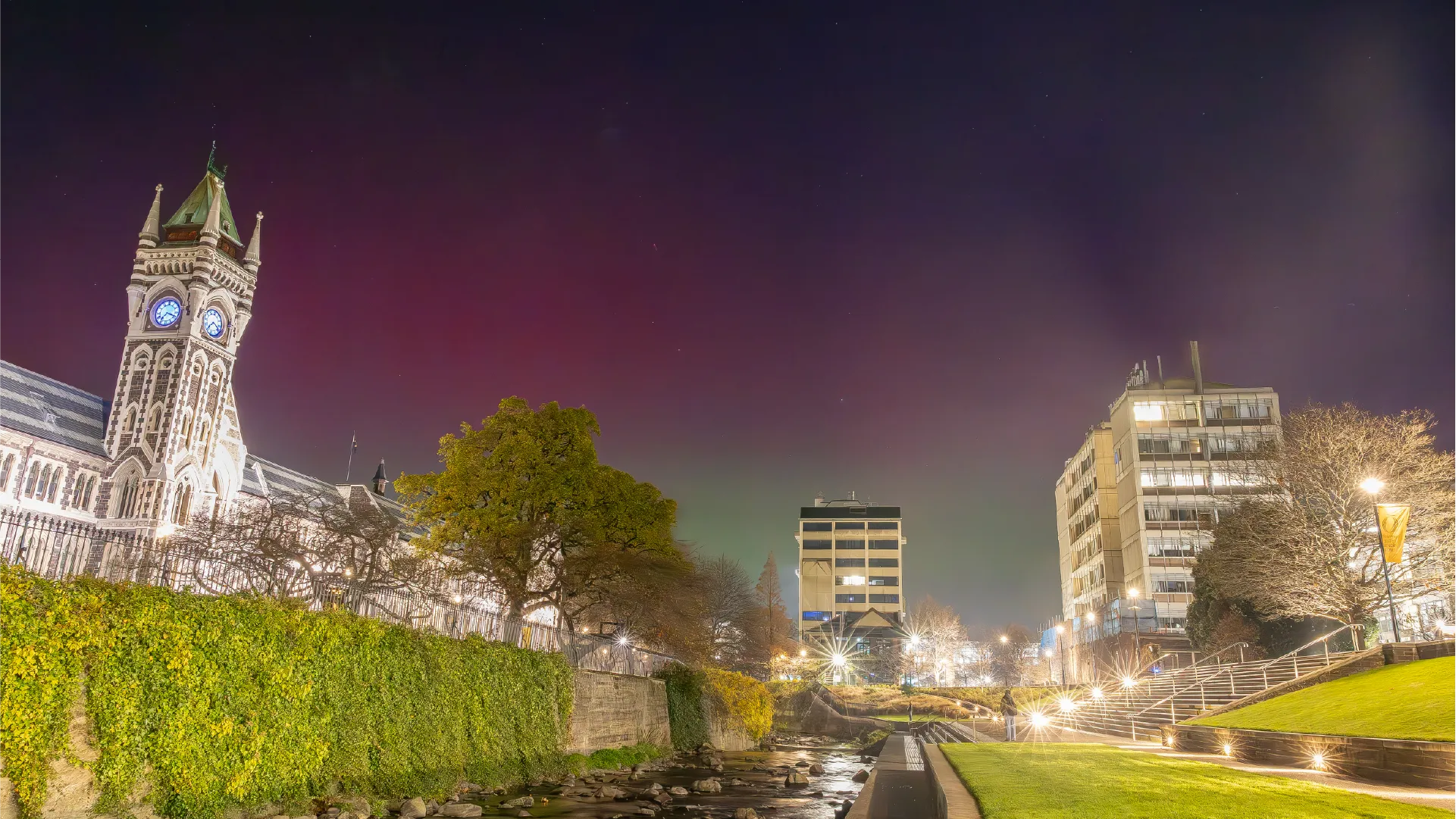
On the evening of 1 June, the aurora australis lit up the sky above Otepoti Dunedin between 6.18pm and 7.30pm. Producer Best Apisit Uthakhamkong was positioned at the University of Otago campus with the iconic Clock Tower in frame, capturing one of the rarest natural spectacles ever photographed above this historic New Zealand campus.
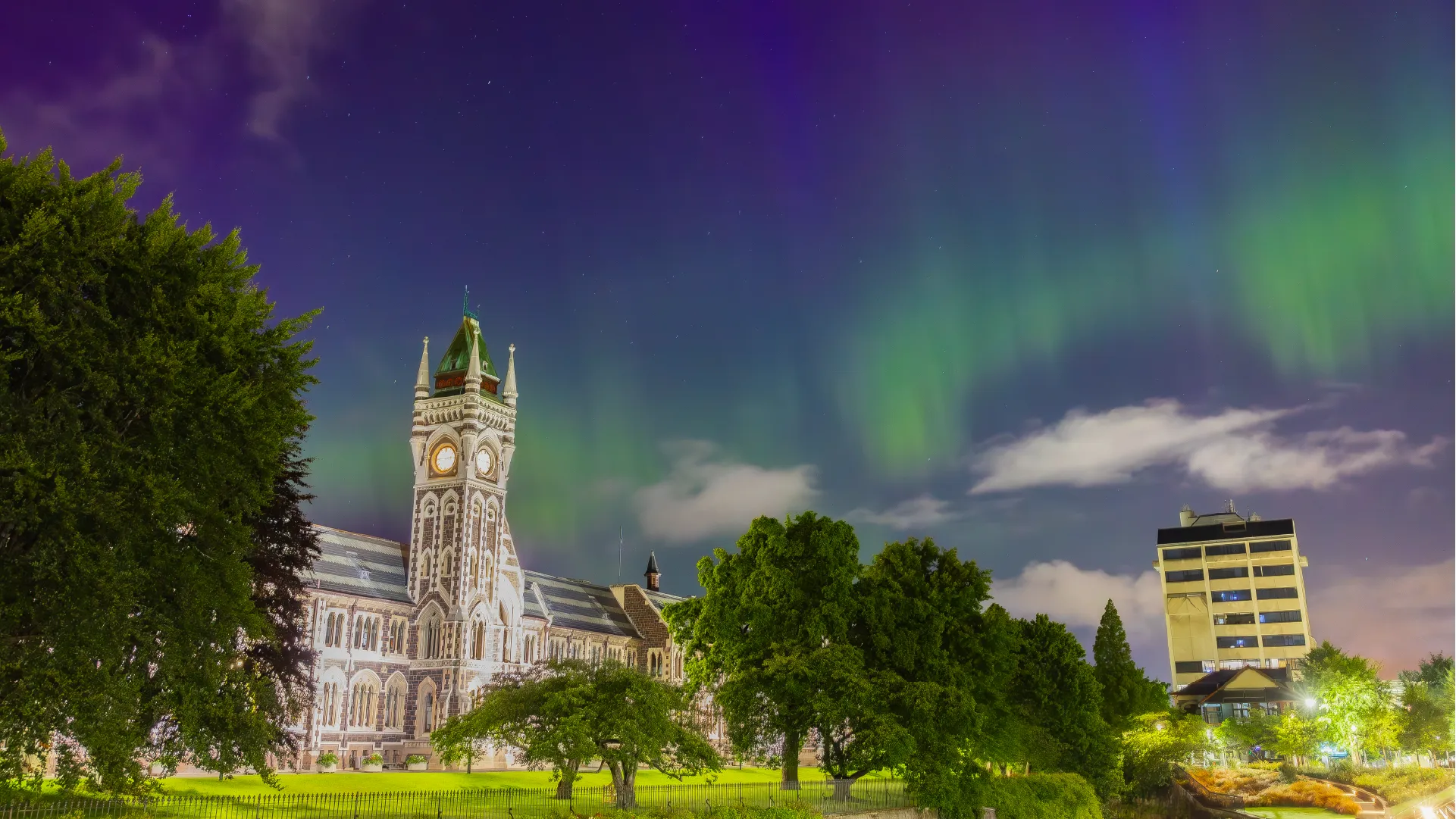
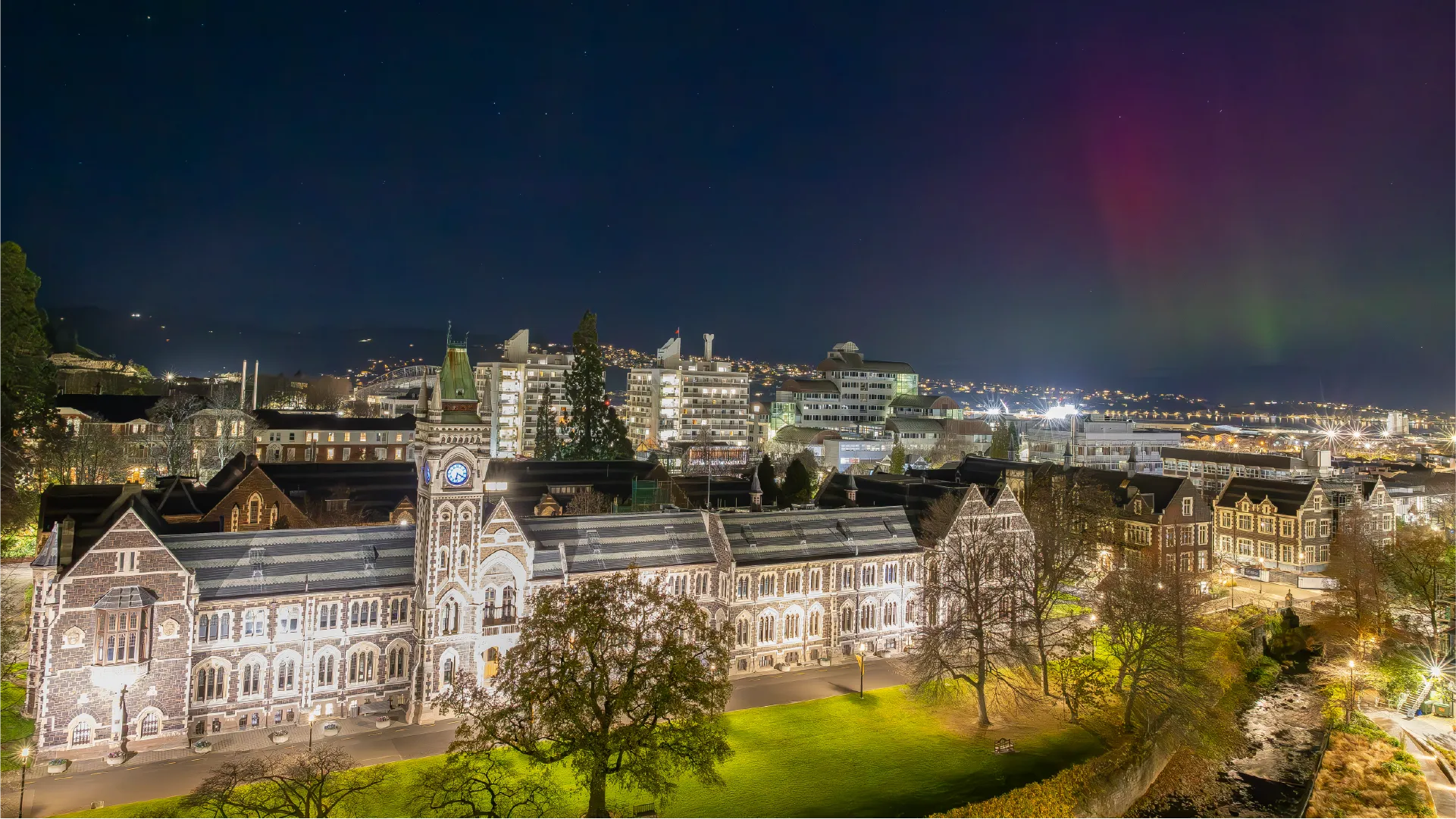
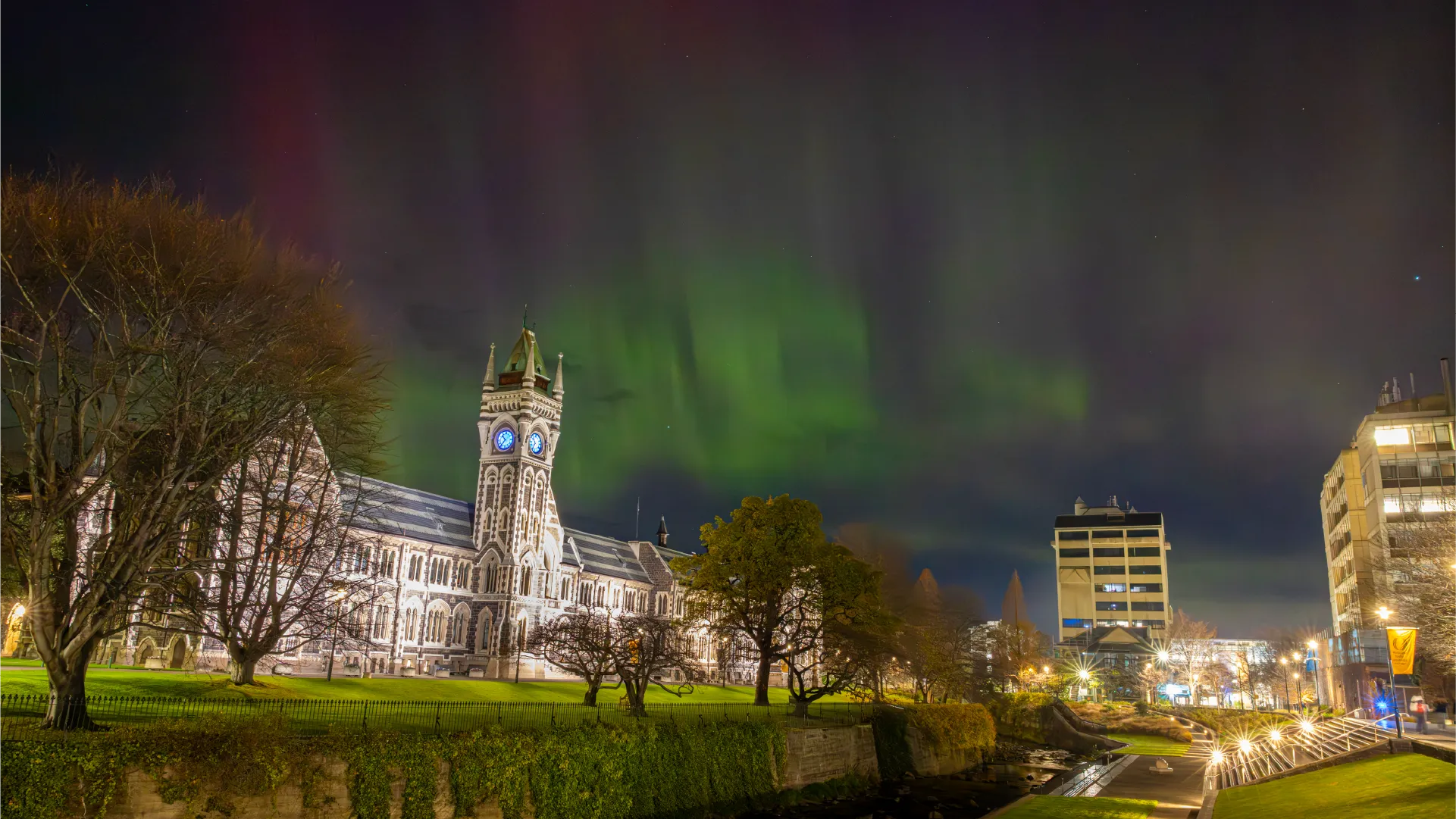
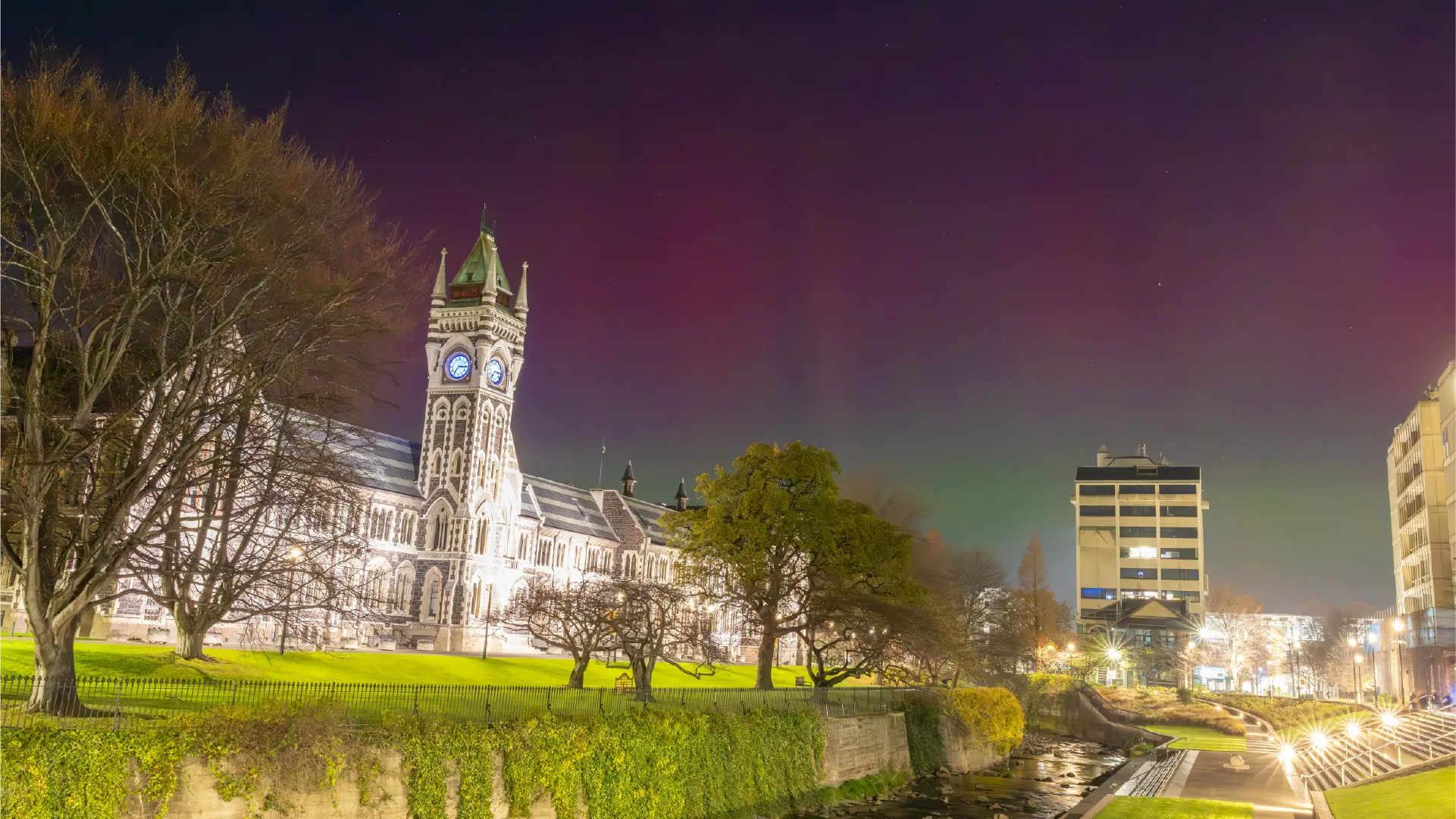
Some shoots go exactly to plan. Others teach you something more valuable.
On the night of 1 June, producer Best Apisit Uthakhamkong was at the University of Otago campus in Dunedin from 6pm, set up to capture a timelapse of the night sky above the iconic Clock Tower. The plan was straightforward: a long session through the evening and into the early hours, capturing the movement of stars across the sky above one of New Zealand’s most photographed heritage buildings.
What happened instead was something neither planned nor predictable.
At 6.18pm, the aurora australis appeared.
The Southern Lights are visible from Dunedin only under specific conditions. A significant geomagnetic storm is required, driven by solar activity strong enough to push the aurora’s visible range as far north as Otago’s latitude of 45 degrees south. The sky has to be clear. And someone has to be in the right place, at the right moment, with cameras already running.
On this evening, all of those conditions aligned. The aurora built quickly, filling the southern sky with curtains of green light that moved and shifted against the deepening blue of early evening. The timing was extraordinary: the sky was still light enough to hold colour in the upper atmosphere, the Clock Tower was fully illuminated, and the contrast between the warm stone of the heritage building and the cool green of the aurora produced an image that is genuinely difficult to believe is real.
Best captured the display on both video and photography, working quickly as the aurora intensified between 6.18pm and 7.30pm. The challenge of aurora photography is that the subject is in constant movement: the light shifts, brightens, dims, and changes colour in real time, and the camera settings that work for one frame may not work for the next. Long exposures are needed to gather enough light, but too long an exposure blurs the movement of the aurora itself and loses the structure that makes it dramatic. The balance between exposure length and sharpness has to be managed continuously throughout a display.
That evening, the display was strong enough that exposures of several seconds captured the aurora with clear definition. The green of the primary display, produced by oxygen molecules in the upper atmosphere being excited by incoming solar particles, was vivid enough to be captured accurately at camera settings that also held the detail of the Clock Tower in the foreground. At points during the display, bands of deeper colour appeared at the upper edge of the aurora, the result of higher-altitude oxygen and nitrogen producing red and purple tones that the camera captured more clearly than the eye could perceive them.
The timelapse session continued from that first aurora display through until around 3am. The aurora did not return at the same intensity after the initial display faded, and the later hours of the session produced star timelapse footage that was excellent in its own right but did not match the drama of what had happened in that first window between six and half past seven.
Which brings us to the lesson of this shoot: focus is everything. Not in the philosophical sense, though that is also true, but in the technical sense. When the aurora appeared, the timelapse setup that had been running for the star footage required rapid adjustment. Aperture, shutter speed, and ISO all needed to change quickly as the brightness of the sky changed. And in the process of those rapid adjustments, the focus on some of the aurora footage shifted slightly, producing material that captured the event but did not reach the technical standard that clearer focus would have achieved.
It is the kind of thing that only happens when conditions change faster than anticipated, and it is the kind of thing that makes the next aurora shoot much better. Equipment configurations for rapid transitions between different night sky conditions are now part of the standard setup for any overnight production at this location.
What the footage does capture, even with those technical imperfections, is something remarkable: the aurora australis above the University of Otago Clock Tower, one of New Zealand’s most recognised and historically significant buildings, in one of only a handful of displays of this intensity to have been visible from Dunedin in recent years.
The photographs captured that evening have since been used extensively by the University of Otago across their digital communications, recruitment materials, and brand photography. They represent a category of content that cannot be commissioned, only captured: the image that documents something genuinely extraordinary about a place, at a moment that cannot be repeated.
For POV, this production is an example of what sustained presence in a location makes possible. We are based in Dunedin. We monitor conditions. We have equipment ready. When something extraordinary happens in the sky above this city, we are already set up to capture it, and when it arrives early and unannounced, we adapt as quickly as the light allows.
Space weather monitored. Vantage points scouted. Cameras running from 6pm. Aurora at 6.18pm. Photographs that will last for years.
Producer
Best Apisit Uthakhamkong
Disciplines
Night Sky Photography
Timelapse
Video Production